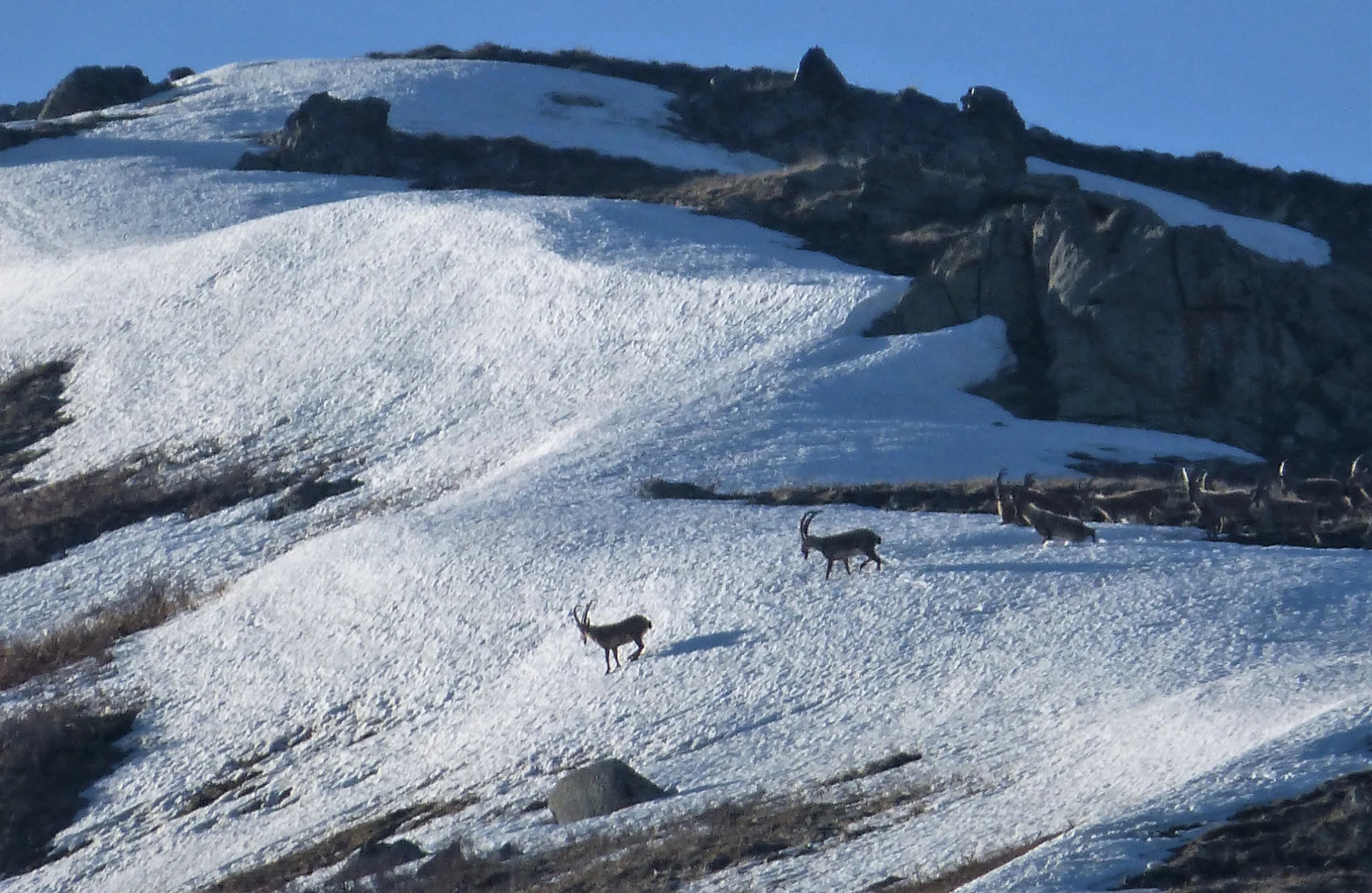
A mountain slope appears motionless. Then a shape separates itself from the rocks: a bezoar goat, almost invisible until it moves. Somewhere above a gorge, a bearded vulture crosses the sky. Beside Lake Sevan, a conversation about wildlife soon turns to trout. On the saline plains of the Ararat Valley, another world exists close to the roots of plants.
Armenia’s Red Book brings these different lives into focus. A large predator, a familiar fish and a tiny insect may share its pages. What connects them is their vulnerability to changes that people often notice only after a habitat has already been damaged.
Reading the Red Book Carefully
The categories in this article come from Armenia’s national Red Book of Animals, approved in 2010. A national assessment describes a species or subspecies within Armenia. A global assessment covers a different geographical area and may reach a different conclusion.
CR means Critically Endangered, EN means Endangered, and VU means Vulnerable. Each indicates a level of extinction risk. “Rare,” “endemic” and “Red Book species” are not interchangeable descriptions: an endemic animal is restricted to a particular geographical area, while a nationally threatened species may also occur in many other countries.
The 2010 volume provides valuable accounts of habitats, threats and ecological relationships. Its population estimates, however, should not be presented as current wildlife counts. This article therefore makes no claim about how many individuals live in Armenia today.
One Country, Several Natural Worlds
Reading the species accounts feels like travelling from the Ararat plain into the high mountains. Saline ground and semi-desert support specialised inhabitants. Higher up are dry steppe, scrub and open woodland. Forests, rocky gorges, subalpine meadows, rivers and lakes provide further environments.
This mosaic matters for more than its scenery. On a single mountainside, animals may need several different elements: feeding grounds, shelter, breeding sites and routes between them. Aquatic species depend on connections between lakes, tributaries and waterside vegetation. A cave-dwelling animal needs a suitable cavity, not simply any dark crack.
“Plant more trees” is therefore not a universal answer. Open steppe, saline ground and high mountain meadows have their own ecological value. Conserving diversity means protecting different communities rather than converting them into one landscape convenient for people.
How Conservation Developed: Reserves and Risk Assessments
Armenian conservation has a history extending well beyond individual recent projects. The [Ministry of Environment](https://environment.gov.am/en/%D5%A1%D6%80%D5%A3%D5%A5%D5%AC%D5%B8%D6%81%D5%B6%D5%A5%D6%80) gives 13 September 1958 as the establishment date of both Khosrov Forest and Shikahogh state reserves. Territorial protection provided a foundation for conserving entire communities of animals and plants.
Another step was the systematic documentation of rare animals. The Red Book of the Armenian SSR appeared in Yerevan in 1987, as recorded in the [Russian State Library catalogue](https://search.rsl.ru/ru/record/01001415448). The national book underlying this article was approved by Government Decision No. 71-N of 29 January 2010. Its explanatory section explicitly follows IUCN Categories and Criteria, version 3.1.
These tools serve different purposes. A reserve protects a place; a Red Book explains which species need attention and why. The next step is turning recommendations into practical work: safeguarding a nest, reducing disturbance, restoring breeding conditions or surveying a poorly understood population.
The Leopard: Protecting the Space Between Refuges
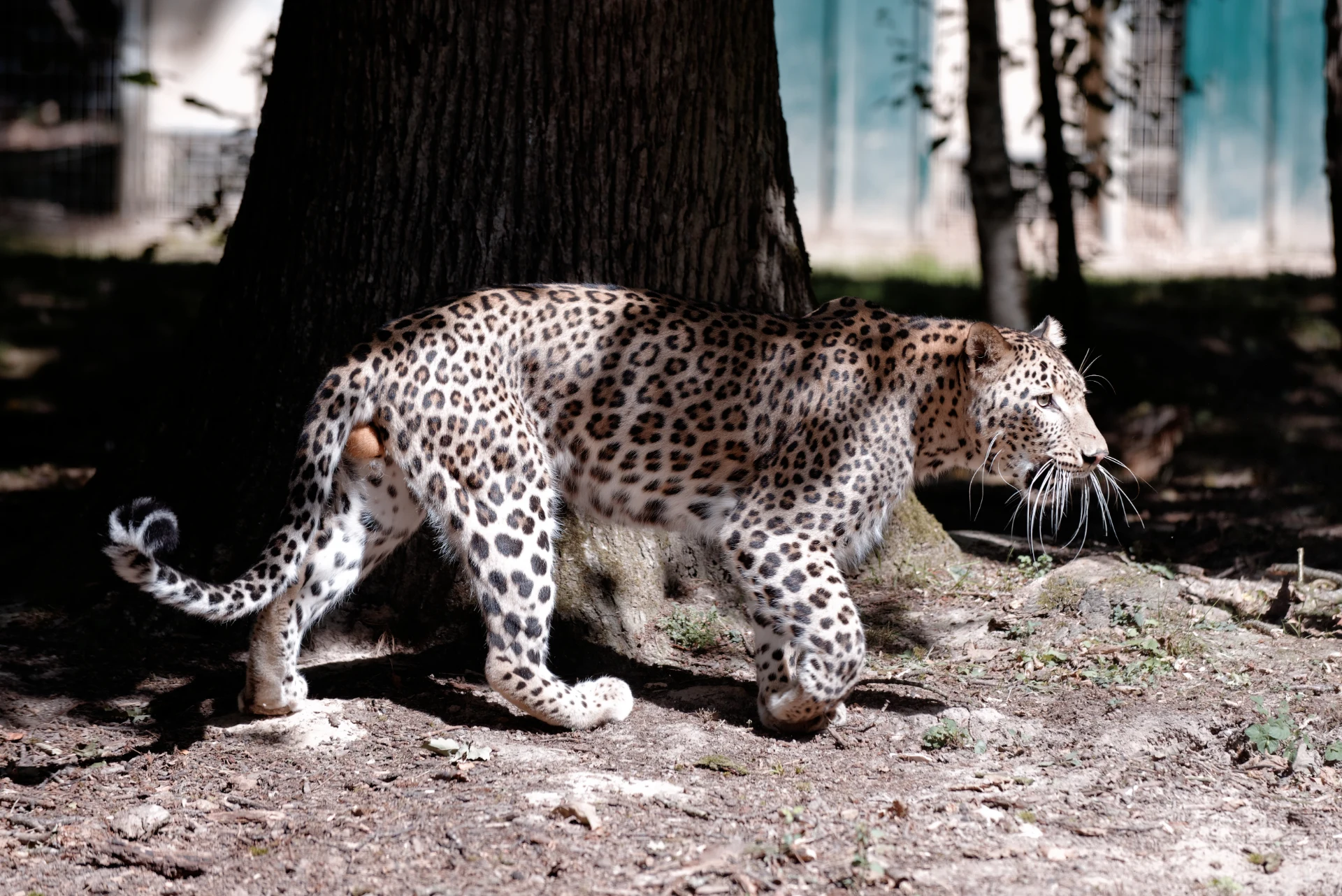
The Caucasian or Persian leopard has a national assessment of CR in the 2010 volume. The book places it within Panthera pardus and uses the subspecies names accepted in the account at the time of preparation.
Its habitat is a mosaic of cliffs, open mountain slopes and sparse woodland. The account describes its Armenian range in the south and southwest, from the Khosrov Forest area towards the Iranian border. Rocks provide shelter and opportunities to hunt, while wild ungulates form an important part of its prey.
Protecting a leopard therefore involves more than safeguarding an attractive gorge. Suitable areas must remain connected by routes the animal can use. Roads, mining and persistent disturbance can interrupt those connections. For an animal that needs to move across a landscape, a safe passage can be as important as a secure resting place.
The Bezoar Goat: A Life on Steep Ground
The bezoar goat, Capra aegagrus, is listed as VU in the same national assessment. Its habitat includes difficult rocky terrain, scree, dry open woodland and patches of shrubs. The apparent inaccessibility of mountains does not make them safe: the account identifies poaching, land conversion, mining and livestock grazing among the threats.
The Red Book describes seasonal changes in altitude, with animals moving lower in winter and higher in summer. Conservation must therefore consider more than the cliff where a visitor happens to see a goat. It must also account for the surrounding habitat used at other times of year.
Bezoar goats are among the leopard’s prey. Their protection helps maintain relationships between mountain vegetation, herbivores and large predators rather than preserving an isolated species in a scenic setting.
The Armenian Mouflon: Open Mountains Need Quiet
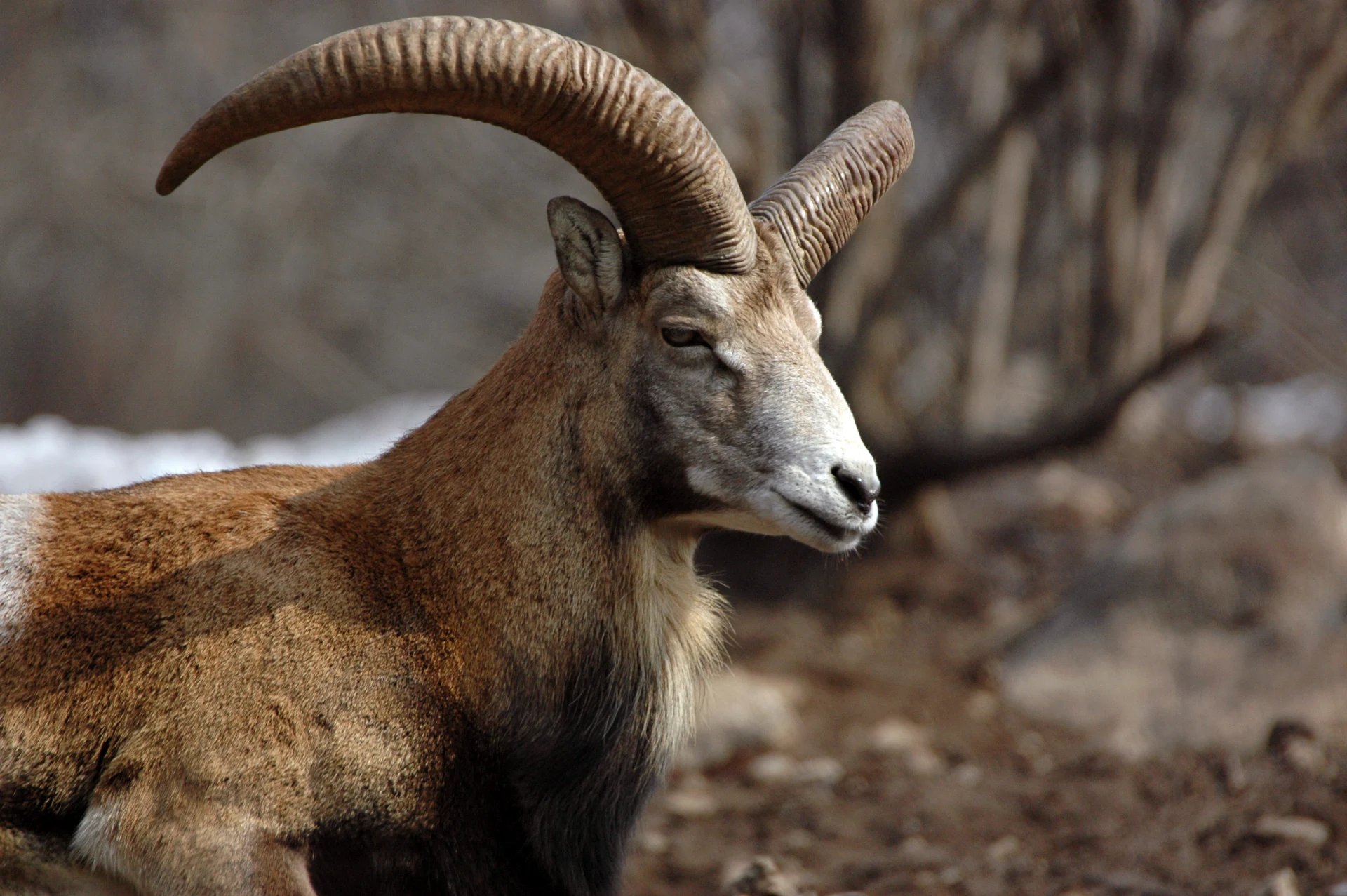
The Armenian mouflon, listed in the book as Ovis orientalis gmelinii, is assessed as EN. Its habitats include dry mountain steppe, open areas with juniper and other drought-tolerant vegetation, and subalpine and alpine meadows.
A mouflon is a wild sheep, not another name for a mountain goat. Its behaviour and habitat requirements deserve attention in their own right. It shares with the bezoar goat several threats associated with hunting, habitat damage and the expansion of human activity into mountain landscapes.
For a visitor, the practical lesson is straightforward: watching should never become pursuit. If an animal repeatedly moves away because people approach it for a photograph, the encounter is already changing its behaviour. Distance is part of responsible wildlife observation.
The Bearded Vulture: Connecting Sky and Ground
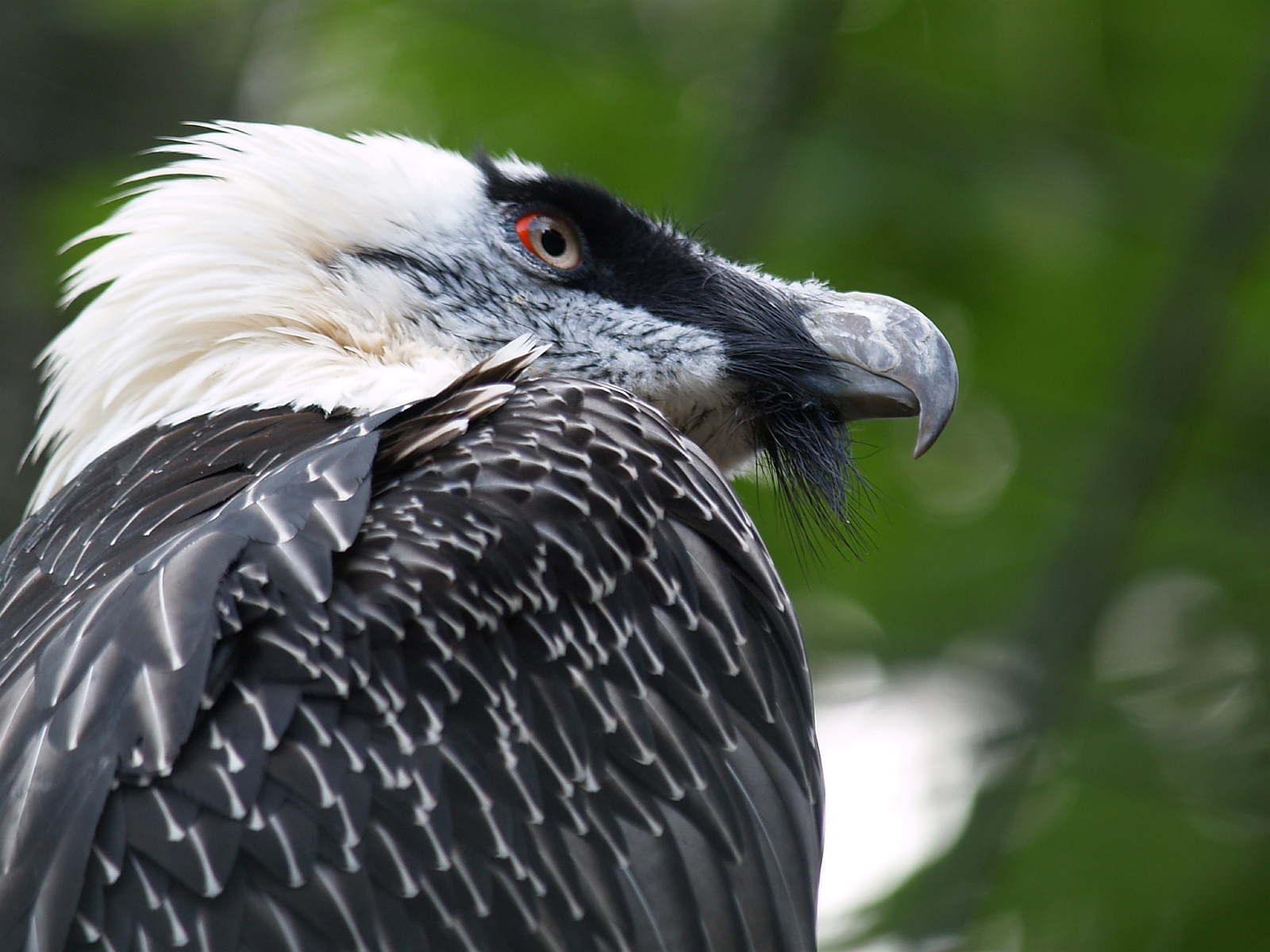
The bearded vulture, Gypaetus barbatus, has a national status of VU in the 2010 book. Its silhouette makes it memorable, but its ecological role matters more than its appearance. It feeds on animal remains and depends on the availability of food across the landscape.
The species account connects worsening food conditions with declines in wild ungulates and identifies poisoning and illegal killing among its threats. Events on the ground can therefore shape the future of a bird seen far above a gorge. Protecting a nesting cliff is not enough if the wider feeding area becomes unsafe.
Extra care is needed around nesting sites. A close photograph does not justify disturbing breeding birds, and publishing the precise location of a nest can attract further unwanted attention.
The Black Stork: A Forest Where Young Can Grow
The black stork, Ciconia nigra, is nationally assessed as VU. The account associates breeding in Armenia with northern regions. Its habitats include forests and rocky gorges near rivers, woodland wetlands and lakes; nests can be built in trees or rock recesses.
Complete forest clearance is not the only problem. The book identifies thinning woodland, declining mixed-forest habitat and possible disturbance during breeding. A place may remain green on a map yet no longer offer sufficient undisturbed space for successful reproduction.
The account recommends changes to forest management and restrictions on visits during the breeding season. For travellers, a discovered nest should not become a group excursion destination. Observations made from a distance and shared with specialists without publicly revealing the precise location are more helpful.
Sevan Trout: Why the Names of Forms Matter
The story of Sevan trout, Salmo ischchan, requires precise language. The 2010 Red Book treats its forms separately, presenting them as subspecies. Winter ishkhan and bojak are recorded as Extinct, EX. Summer bakhtak and gegharkuni are assessed as CR.
Saying simply that “Sevan trout is extinct” would therefore misrepresent this source. It would erase the distinction between lost forms and those requiring conservation. It is also important to distinguish the presence of fish from the preservation of their natural reproduction.
For lake fish, conservation is tied to spawning conditions, tributaries and aquatic habitats. A meaningful discussion of Sevan trout inevitably becomes a discussion of Lake Sevan as a living system, rather than a blue surface on a map.
The Otter: Protection Begins Upstream
The Eurasian otter, Lutra lutra, is assessed as EN. Its habitats include clean rivers, streams and lakes with fish resources. Habitat destruction, water pollution and excessive fishing are listed as threats.
An untouched stretch of bank is not enough if upstream activity changes water quality or depletes the food supply. Each river section belongs to a wider catchment, and the effects of land-use decisions can appear far from their origin.
Notably, the account acknowledges that population size was insufficiently understood and calls for research. An honest “we do not yet know” is more useful than a confident but outdated number. In conservation, missing information is a reason to investigate, not evidence that everything is well.
Darevsky’s Viper: Rarity Among Mountain Stones
Darevsky’s viper, listed as Vipera (Pelias) darevskii, is assessed as CR. The book describes high-elevation habitats in the Ashotsk area: rocky subalpine slopes and outcrops with accumulations of flat stones.
For this animal, a small patch can contain essential living space. The threats identified include habitat destruction, intensive use of mountain meadows, unregulated livestock grazing and illegal capture. Loss cannot be measured simply by how much “green ground” remains: changing the structure of a meadow and its rocky shelters can remove necessary conditions.
The book records conservation measures developed from 2004 and protection in Lake Arpi National Park. Keep your distance from a snake and allow it to move away. Trying to catch, handle or reposition it for a photograph endangers both the animal and the person.
The Spur-thighed Tortoise: Not a Walking Souvenir
The spur-thighed or Mediterranean tortoise, Testudo graeca, has a national assessment of VU. It occupies various dry habitats, including steppe, sparsely vegetated slopes, scrub and open woodland. Habitat conversion and illegal capture are identified as major threats.
A tortoise may be easy to pick up, but removing it has consequences beyond the encounter. The account notes its late sexual maturity. An adult represents years of survival and potential participation in reproduction.
A wild tortoise should therefore not become a pet brought home from a walk. The considerate response to an ordinary encounter is to leave it in its habitat and observe without intrusive interference. Conservation also depends on refusing to create demand for animals taken from the wild.
Blasius’s Horseshoe Bat: Why a Cave May Need Quiet
Blasius’s horseshoe bat, Rhinolophus blasii, is assessed as EN. Its account describes a cave-dwelling animal of mountain-steppe and semi-desert zones and associates Armenian records with southern Syunik. The bats leave to feed at dusk and return around dawn.
Scientific restraint matters here: the source lists the main threats as unknown. A detailed, modern story of decline cannot be attributed to this species on the basis of that account. It nevertheless proposes a specific measure: restricting visitor access to occupied caves.
An inconspicuous underground refuge can have considerable conservation value. Visitors should follow access rules and avoid disturbing groups of bats. The desire to explore every corner should not take priority over protecting a living shelter.
Armenian Cochineal: A Small Animal with a Specific Home
Armenian cochineal, or vordan karmir, Porphyrophora hammelii, is assessed as CR. This insect is associated with saline habitats of the Ararat plain and a restricted range of food plants.
Its story shows why places that look unremarkable also deserve protection. Saline ground may seem like unused land waiting to be drained, cultivated or developed. For a specialised insect, those changes can remove both its home and its food.
The species account identifies the conversion of saline land, reclamation works and unregulated grazing among the threats. Conservation begins with recognising the value of the habitat itself. An animal cannot be protected effectively if the conditions supporting its life cycle are removed.
Different Species, a Shared Conservation Problem
The leopard needs connections between suitable areas. Mouflon and bezoar goats need secure habitats across the seasons. Trout need functioning aquatic environments, and cochineal needs saline ground with its food plants. Together, their stories point to a common principle: wildlife depends on habitats that continue to function.
Reserves and national parks are important, but a protected boundary cannot by itself stop pollution, disturbance or the loss of links with neighbouring areas. Effective conservation also requires monitoring, action against poaching and land-use decisions that take wildlife into account.
Turning Threats into Practical Action
Threats recur across the accounts, but require different responses. Where shooting and capture are the problem, patrols and action against illegal trade matter. Where habitats are being lost, threatened species must be considered before construction, ploughing or mining begins. Repairing damage afterwards is generally harder.
For aquatic animals, priorities include water quality, spawning conditions and pressure on fish resources. The bojak account connects the loss of spawning grounds with the artificial lowering of Lake Sevan. Accounts of surviving trout forms discuss artificial propagation and releases of young fish. Those measures do not remove the need to conserve natural breeding conditions.
Forests must be managed with nesting sites in mind, not only timber. Grazing pressure on high mountain pastures needs to reflect the vulnerability of particular sites. Around caves and nests, visitor restrictions should protect actual refuges rather than exist only on a sign.
How Can We Tell Whether Conservation Works?
The Red Book provides a starting point, not a substitute for further observation. Assessing results requires returning to the same areas and comparing evidence collected by clear methods. One encounter confirms an animal’s presence at a particular place and time; it does not by itself demonstrate population growth.
The reverse also calls for caution. A visitor seeing no animals does not prove that a species has disappeared. Wildlife can be secretive, nocturnal or seasonally mobile. Systematic surveys, repeated counts and specialist interpretation help distinguish real change from chance observations.
Residents and travellers can contribute useful evidence when observations retain their context: date, photograph, approximate place and circumstances. A report may prompt further investigation. Identification of difficult species and conclusions about population condition are best left to specialists.
Helping Without Causing Harm
On a walk, follow permitted routes, keep your distance from animals and nests, and do not feed wildlife. Avoid buying wild animals or products of uncertain origin. If you observe a rare species, a photograph and date can be useful to researchers or protected-area staff. Precise locations of vulnerable sites are better shared privately with appropriate specialists than posted openly.
The most lasting change may be a change in attention. Mountains are not empty when people are absent. A gorge, a lake, a saline plain and a dry hillside are already occupied by intricate forms of life. Armenia’s Red Book asks whether we will leave enough room for that life to continue.