The Man at the Piano
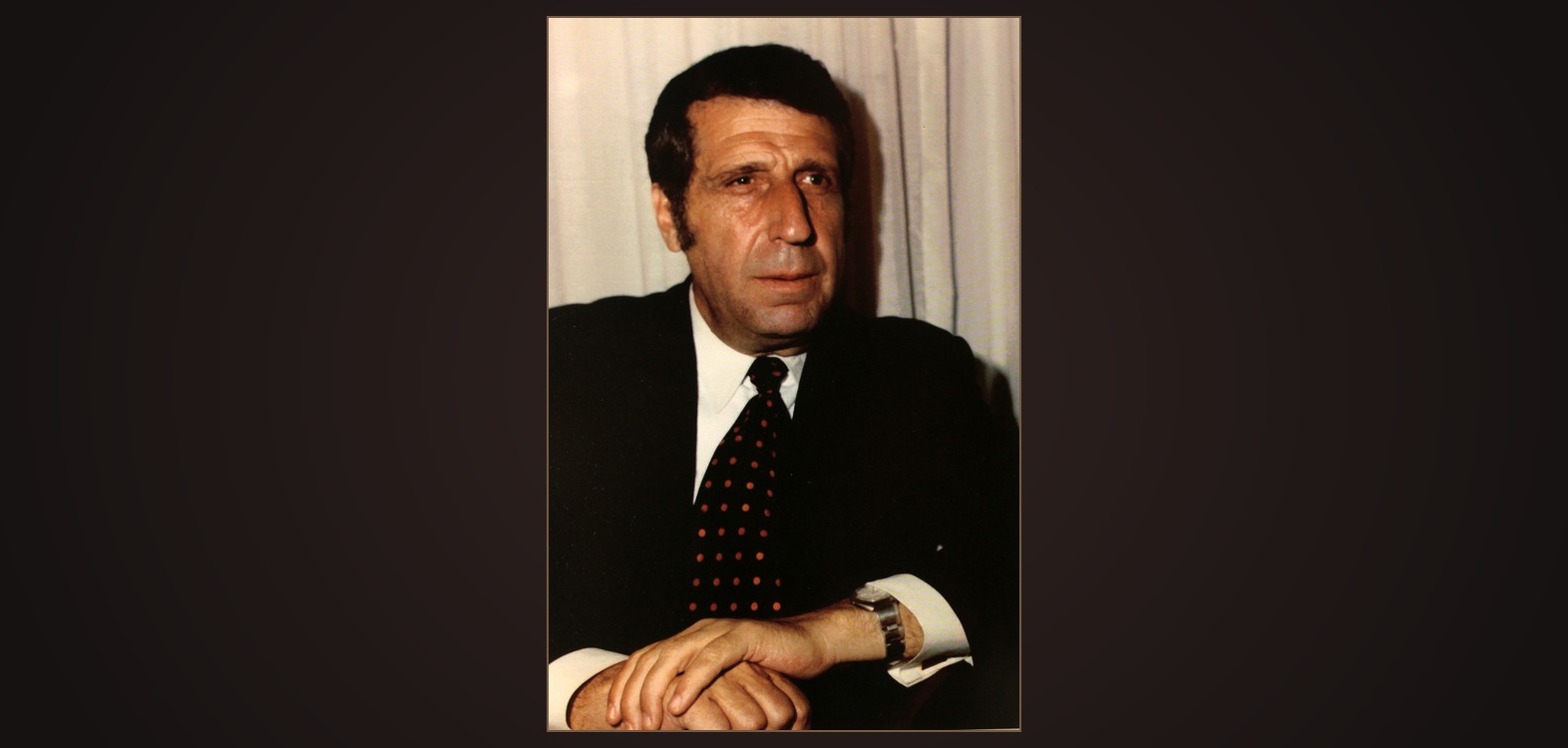
In a 1982 television recording, presenter Vera Gornostayeva talks with Babajanyan. He sits at the piano, playing and humming. Among the tunes he demonstrates are “Don't Hurry,” “Winter Love,” and the Nocturne. There is no grand orchestra here, no famous voice listeners have come to associate with a song. You hear the composer shape the phrase himself. The melody starts under his fingers, passes into his voice, then returns to the keys. Musicians on Music, footage from the State Television and Radio Archive [1].
It’s easier to recognize a melody than to explain why it stays with you for years. That happens especially often with Babajanyan. You know a song well enough to sing the next line, even if you can’t immediately name the composer. Then you put on one of his concert works and find it hard to believe it’s the same person.
Follow a familiar chorus to the opening bars of the Heroic Ballade and on to Six Pictures, and you can hear how much a melody could do in Babajanyan’s hands. He could stretch it, break it apart, or give it to another voice. He could even make you wait for it where it never comes. And somewhere amid all those changes, your ear still catches a phrase it wants to hear again.
Yerevan and Moscow: Two Cities, One Musical Education
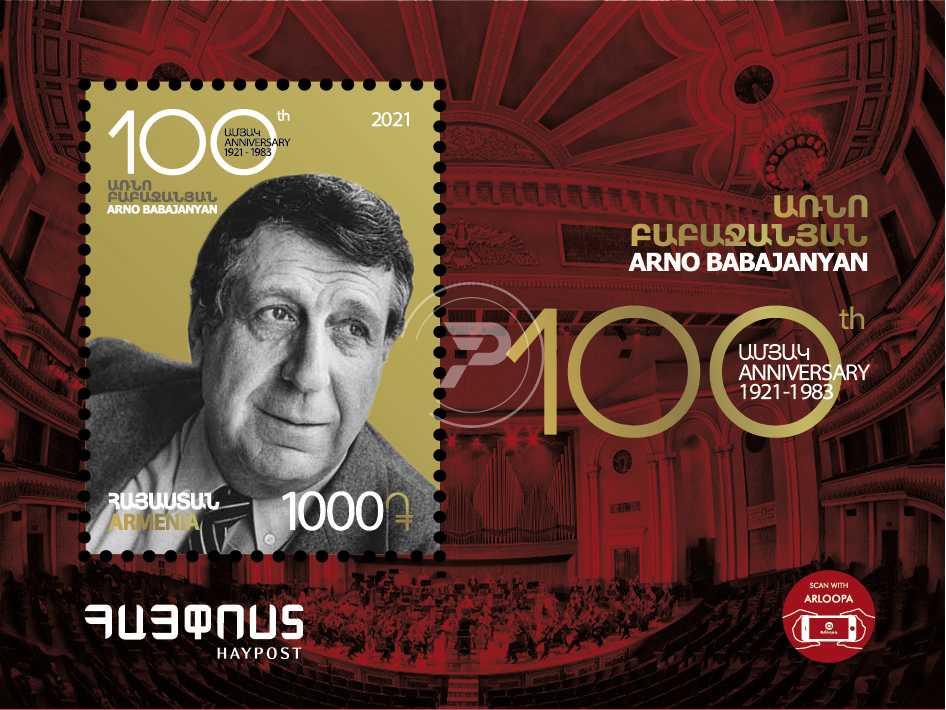
Babajanyan was born in Yerevan in 1921. According to the Armenian National Music project, his father loved music and played the kamancha and the shvi. Arno studied composition in Yerevan and graduated from Konstantin Igumnov’s piano class at the Moscow Conservatory in 1948. These were two different ways of learning to listen. A pianist has to make a phrase convincing right now, in front of an audience. A composer has to decide what place that phrase will have in the work as a whole. Babajanyan knew music from both sides: the score and the keyboard. Armenian National Music [2], Russian National Museum of Music [3].
In a 1970 interview, Babajanyan recalled that his father bought him a harmonium when he was five. When there was no room in the music school’s piano class, he chose to wait until the following year so he could study the instrument he’d set his heart on. In the same interview, he describes his work with the Armenian Song and Dance Ensemble as an important part of his education: he spent years arranging folk tunes. It was a lesson in what to do with a melody that already existed: give it a new form while preserving the qualities that make it recognizable. Novosti Press Agency interview, The Armenian Herald, May 9, 1970 [4].
His early piano repertoire included a Prelude, the Vagharshapat Dance, and a Toccata. The titles already suggest three different listening experiences. Vagharshapat evokes a place and its cultural memory. A toccata promises movement and touch at the keyboard. A prelude doesn’t tell you what to picture. These works earned the young Babajanyan a prize at a composers’ competition in Prague in 1947. Armenian Museum of Moscow on Babajanyan’s concert music [5].
Listen to the Vagharshapat Dance on its own. The piano doesn’t have to imitate a folk instrument for you to hear the dance. What matters is the placement of the accents, the spring in the rhythm, and the energy of repetition. Listen, too, for the way a phrase comes back. You already know its shape, so the composer is free to change its weight, its breathing, or where it seems to be going. You can hear this same idea on a different scale in the Heroic Ballade.
Heroic Ballade: What Happens to a Single Theme
The Armenian Composers’ Union dates the Heroic Ballade to 1950. The score published in Yerevan in 1954 includes a subtitle: “Symphonic Variations.” That gives us a way into the work. In a set of variations, a theme returns in different forms. You can follow it without a score or any special training. When the character of the music changes, ask yourself what you can still recognize. Armenian Composers’ Union catalog [6], score at the Russian State Library [7].
The word “heroic” promises something loud. There are loud passages, but volume on its own tells you little. What’s more interesting is the contrast between the weight of the orchestra and the piano’s individual line. What sounds like a sweeping gesture in one passage can feel exposed in another. Instead of a string of similar verses, you hear the same thought change character according to how it is expressed. On your next listen, try holding the opening musical gesture in your mind and notice where your ear picks it up again.
Babajanyan performed this music himself. A recording in the National Library of Armenia’s collection credits him at the piano, with Natan Rakhlin conducting the All-Union Radio Large Symphony Orchestra. The same record contains the Piano Trio, with David Oistrakh and Sviatoslav Knushevitsky joining Babajanyan. On a single disc, you can compare the way he plays in front of a large orchestra with the way he listens to two equal partners in a chamber piece. Archival recording in Armenia’s union library catalog [8].
Piano Trio: A Melody Changes Voices
On March 13, 1953, Babajanyan, Oistrakh, and Knushevitsky performed his Trio in the Small Hall of the Leningrad Philharmonia. This is a concert with a date and a venue, not a legend about “three great musicians.” The Philharmonia’s archive names all three players and the hall. The Armenian Composers’ Union dates the work itself to 1952. St. Petersburg Philharmonia Archive [9], catalog of works [6].
The second movement, Andante, is a good place to start. Listen for the lyrical line, but also for what happens around it. The parts enter at different moments, answer one another, and pick up something that seemed, just a second before, to belong to a single instrument. A violin or cello can hold a note under the bow; a piano note begins to fade as soon as the key is struck. A phrase can say the same thing and still change its inflection as it passes between such different voices.
In chamber music, the effect is especially clear. Each voice is exposed, with no larger ensemble to hide in. And if you go back to the first movement, the quiet Andante no longer sounds like a lovely miniature set apart from the rest. Its calm motion follows a stretch of tension that builds again in the finale. Over the course of a larger work, Babajanyan shapes not only the notes but also the moment when you can finally catch your breath.
The Trio’s lyrical movement may be what stays in your memory, but it’s worth listening to the whole work at least once. You’ll hear how much motion and conflict the music has to carry before it can come to rest.
Six Pictures: A Piano Beyond the Usual Rules
The Yerevan edition published in 1965 runs to just twenty-eight pages. They contain “Improvisation,” “Folk Song,” “Toccatina,” “Intermezzo,” “Chorale,” and “Sasun Dance.” All six are written for solo piano. Listening, you might find it hard to believe all those sounds come from the same instrument. Score of Six Pictures [10].
In the first piece, the phrases seem to test the space around them, coming together and breaking apart. In “Toccatina,” the pianist is barely allowed to stay still; short, sharp attacks keep pushing the music forward. Near the end of the cycle, Babajanyan puts two pieces next to each other that seem to have nothing in common. In “Chorale,” you can listen to a chord and to how long its sound lingers. “Sasun Dance” shifts your attention straight back to movement and accents. That transition is a good way into the cycle. Hayk Melikyan plays Six Pictures at the Komitas Museum-Institute in Yerevan [11].
Musicologists hear turns of phrase associated with the modes of Armenian folk music alongside elements of serial technique, in which a composer organizes pitches according to a prescribed sequence. For a listener, it’s more useful to notice what these techniques do to your expectations than to memorize their names. You hear a phrase that sounds like the beginning of a song or a dance and think you know what comes next. Then the accent falls somewhere you weren’t expecting, or the melodic figure pulls away from the note you thought would anchor it. The music still has a character of its own. You begin to hear it not only in the tune but in the rhythm that holds the phrase together. Musicological analysis of the cycle in Armenia’s academic repository [12].
After performing at a festival of Soviet music in Paris, Babajanyan told the Novosti Press Agency he had played his Poem and Six Pictures there. He said he had borrowed elements of the twelve-tone system for the cycle without letting the system take over the music or crowd out its Armenian character. He also wanted six pieces, each with a distinct mood, to be able to stand on their own while still forming a whole. Listen to “Chorale” and the dance back to back and see how that works. Novosti Press Agency interview on the Paris performance [4].
The folk character of this music goes deeper than a title. Call “Sasun Dance” simply “No. 6” and the pattern of movement would still be there. Conversely, an Armenian place name in the title is not enough to give a piece a recognizable voice. What matters is what the composer does with a rhythm, a pause, or a turn in the melody. You can hear that especially clearly here: Babajanyan writes as unconventionally as he needs to, without ceasing to sound like himself.
When a Melody Found Its City
In 1958, Yuri Yerzinkyan and Laert Vagharshyan’s film Song of First Love came out. Babajanyan and Lazar Saryan wrote the music: Babajanyan composed the songs and Saryan handled the orchestral score. The Armenian Radio Archive preserves recordings from the film, including Sergei Davityan singing “Yerevani Sirun Akhchik” (“Pretty Girl of Yerevan”). Film from the National Film Center of Armenia [13], Yerevan Conservatory journal [14], Armenian Radio Archive [15].
Take another number from the same film, “My Yerevan,” with lyrics by Nora Adamyan. Music can serve a scene the first time people hear it and go on living long after the scene is forgotten. You can sing “My Yerevan” without remembering the film’s plot. The song takes on a second purpose: it gives someone words and a tune for a feeling that used to be theirs alone. Armenian Museum of Moscow on the history of Babajanyan’s songs [16].
A different city comes to life in “The Best City in the World,” with lyrics by Leonid Derbenyov. In an archival recording from 1965, Muslim Magomayev sings about Moscow. Listen to how different it sounds from the Yerevan of the film. This music puts a spring in your step right away. You can get hooked before you’ve learned the words: your body already understands the rhythm. In the chorus, Derbenyov and Babajanyan give the listener a line that’s easy to join in on. “The Best City in the World,” performed by Magomayev, State Television and Radio Archive [17].
You could hear these two songs as the diary of someone who loved more than one place. Or you could listen for how each song brings its city to life. In one, what matters most is the place you long to return to. In the other, you’re already out in the street and the music picks up your stride. Babajanyan had no need to write the same anthem twice.
Songwriting Was No Lesser Art
The familiar story of a composer with “two faces” suggests that he saved his serious art for professionals and gave wider audiences something simpler. Babajanyan saw it differently. In the same 1970 interview, he said that working on the films In Search of the Addressee and Song of First Love persuaded him to keep writing songs. “When the public likes my songs it gives me as much pleasure as when a symphonic composition is successful,” he said. He also explained what songwriting offers a composer: a way to hear more clearly what people of his own time were feeling. Novosti Press Agency interview, The Armenian Herald, May 9, 1970 [4].
A song poses a problem that a solo piano piece doesn’t: the melody has to fit the way people speak. Words come with their own stresses, a singer has only so much breath, and a poem has a pace of its own. When the music fights those things, a listener may not know why, but can feel the strain. When they work together, it sounds as if the words had always gone that way. You can start singing along before you’ve had time to work out how it’s done.
To hear what a performer brings to a song, put on Magomayev after the 1982 recording of Babajanyan playing and humming at the piano. With the composer, you can follow the movement of the phrase almost without any embellishment. With the singer, it takes on a different scale and seems to have more room to breathe. There’s no need to decide which is the “right” version. Each performance helps you hear the other.
Nocturne: When the Words Come Later
The Nocturne began as an instrumental piece. The Armenian Composers’ Union lists it as a concert piece for piano and orchestra. In the composer’s own performance, the melody holds your attention without a single word. It stretches beyond the length of that first breath before coming back to rest. You don’t have to wait for a singer to name the feeling; you can hear it in the length of the phrase itself. Armenian Composers’ Union catalog [6], Babajanyan’s own performance, on Araik Babajanyan’s channel [18].
The piece later became a song with words by Robert Rozhdestvensky. In a recording from 1988, Muslim Magomayev sings a melody many listeners already knew without words. Start with the composer’s recording, then play the vocal version. Listen for where the words follow the music’s natural course and where they make the very same phrase sound different. “Nocturne,” performed by Magomayev, State Television and Radio Archive [19].
What makes you want to put words to this particular music? There need not be a single historical answer. You can hear someone reaching out even before you know whom they’re addressing. When words arrive, they give the melody a particular meaning without taking away its freedom. Play it without a voice again, and it still leaves room for the listener’s own story.
A Listening Guide to Babajanyan
1. Heroic Ballade, performed by the composer [20]. Remember the opening theme and follow it through the variations.
2. Piano Trio, recorded by the Lincoln Trio [21]. Start with the Andante, then listen to all three movements. The archival record’s catalog entry [8] lists the musicians on the recording with Babajanyan himself.
3. Six Pictures, performed by Hayk Melikyan [11]. If you’re short on time, start at 07:11 for “Chorale,” followed by “Sasun Dance.”
4. Song of First Love [13] and “The Best City in the World” [17]. Two cities, different rhythms, and different ways to leave a melody in your memory.
5. The Nocturne at the piano [18] and the Nocturne sung by Magomayev [19]. Listen to them back to back.
Then go back to the beginning, to the recording of the composer sitting beside Vera Gornostayeva. The recording itself may no longer surprise you. What might surprise you is how much music you’ve traveled through to get back to that piano. He hasn’t finished the phrase, and you probably already know how it goes. You might even hum along with him.