At the beginning of the tenth century, the Armenian crown could have become no more than a reminder of a brief national revival. King Smbat I had died in captivity. Enemy armies were moving through the country. Princes were seeking their own ways to survive, while foreign rulers exploited their rivalries to control Armenia through others.
His son Ashot did not inherit a peaceful palace and an obedient army. He inherited a war, fractured ties between the provinces, and an authority he had to prove anew almost every time he crossed the mountains.
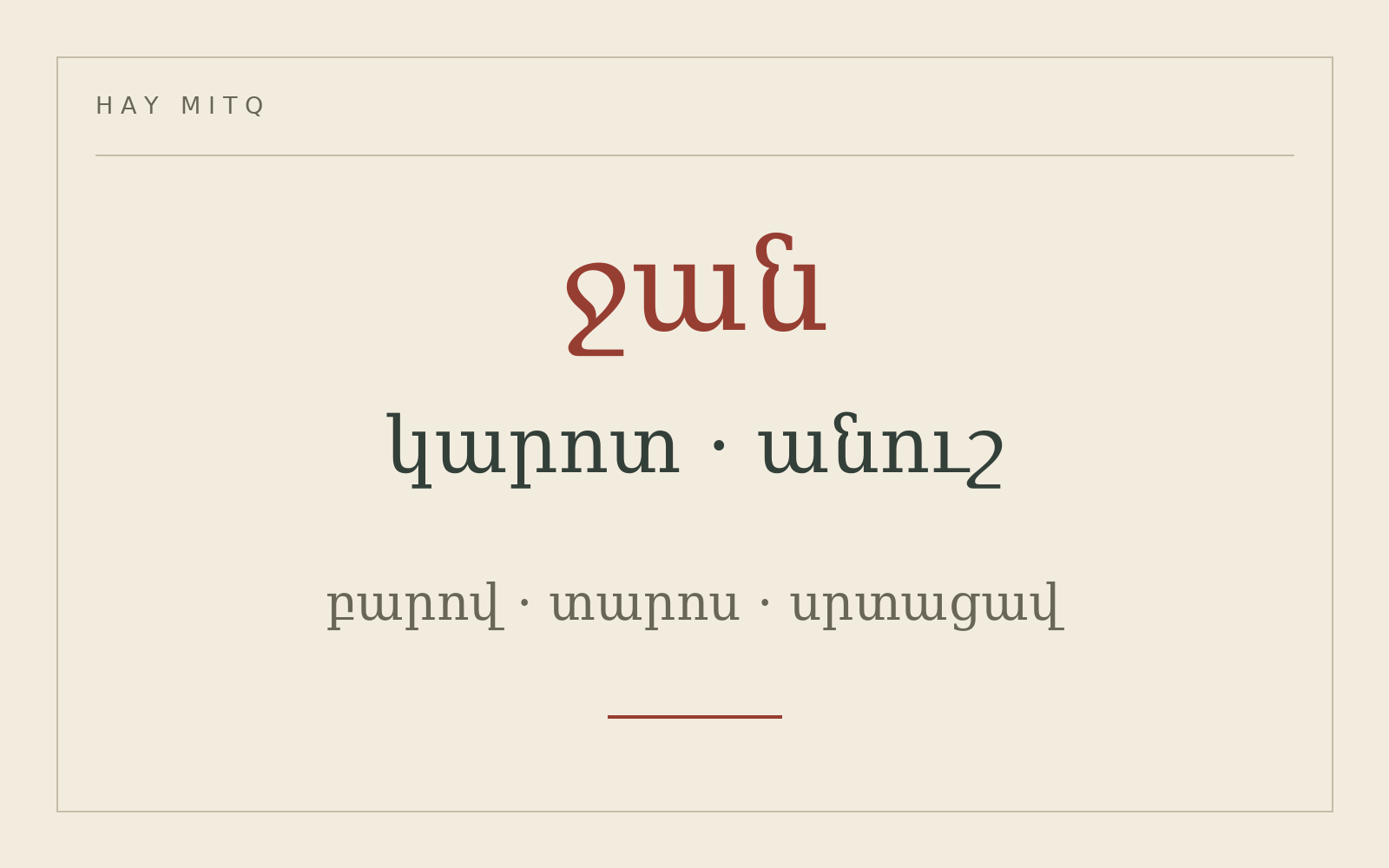
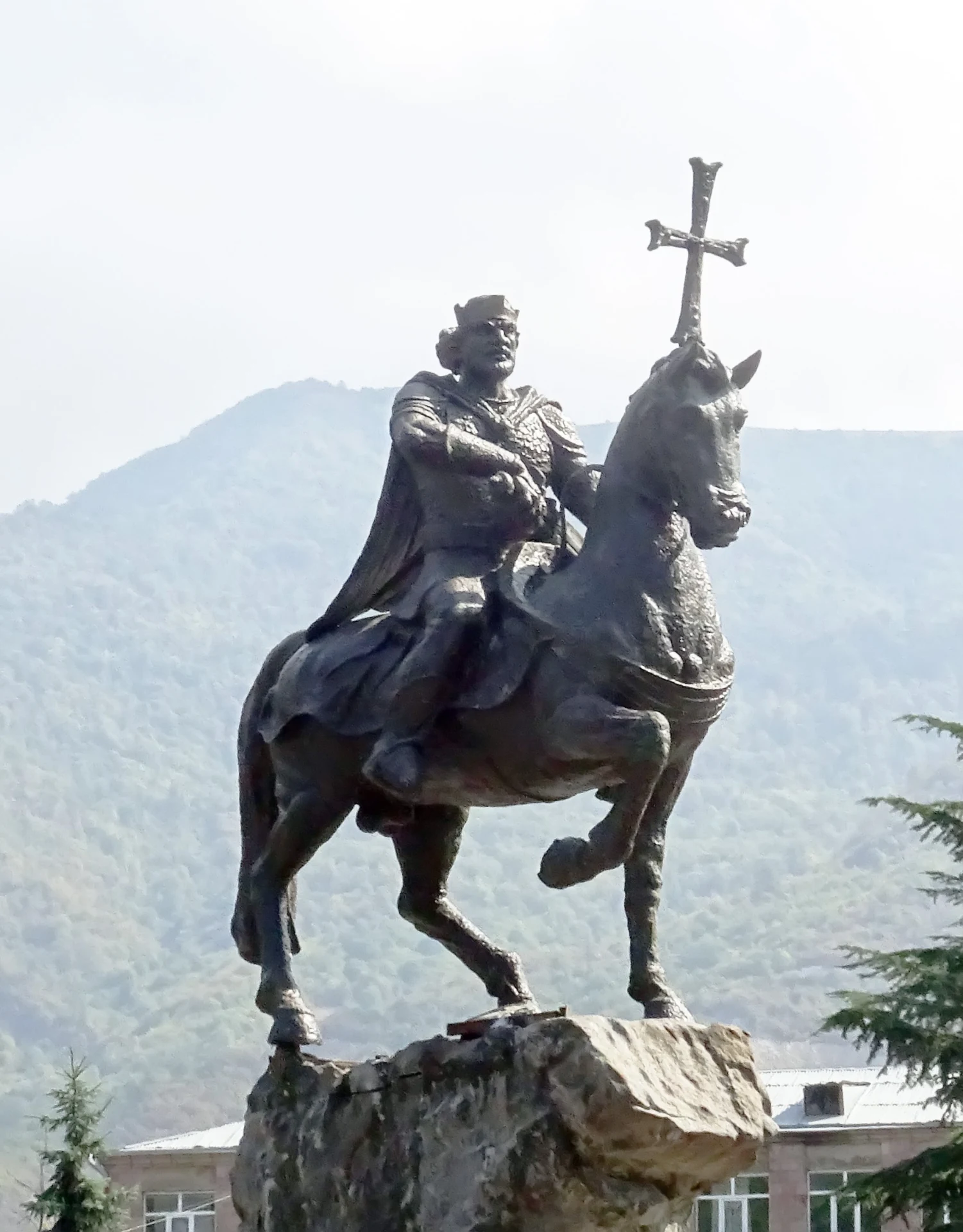
History remembers him as Ashot II the Iron. In Armenian, his name has a particularly concise and forceful sound: Աշոտ Երկաթ — Ashot Yerkat.
Yet to see him only as a warrior with a sword is to miss much of the story. His greatest victory was ensuring that the Armenian kingdom survived the catastrophe and preserved its statehood.
A Kingdom That Still Had to Be Held Together
To understand Ashot II, we need to go back one generation.
At the end of the ninth century, the Bagratuni dynasty restored Armenian kingship. In 885, Ashot I was recognized as king. After a long period of foreign domination, Armenia once again had a monarch of its own, around whom the country's political life could take shape.
A medieval kingdom, however, should not be imagined as a modern state with uniform laws and officials in every district. The princely houses retained considerable power. They had hereditary estates, fortresses, troops, family alliances, and their own ideas about whom they ought to obey.
The king had to hold this complex system together. That required military authority, recognition from noble families, the support of the Church, and the ability to negotiate with neighboring powers.
Armenia stood between the interests of Byzantium and the Abbasid Caliphate. The weakening of central authority in Baghdad did not mean that the danger had disappeared: regional rulers were becoming more independent and could act with particular ruthlessness.
The restored state already had foundations on which to grow. Their strength, however, had yet to be tested.
The Catastrophe of Smbat I
After Ashot I, the kingdom was ruled by Smbat I, the father of the future Iron King. His adversary was Yusuf ibn Abi'l-Saj, the ruler of Atropatene, or Atrpatakan, a region south of the Araxes River.
Yusuf relied on more than military force. He intervened in relations between the Armenian princes and supported rivals of the Bagratuni. In 908, Gagik Artsruni, the ruler of Vaspurakan, received the royal title. Another royal center thus emerged within the Armenian political world.
For Smbat, this meant fighting on several fronts at once. He had to repel an invasion while retaining allies whose interests did not always coincide with those of the crown.
The outcome was tragic. Smbat was taken prisoner and executed in 914. Armenian historical tradition preserved the memory of his martyrdom and his refusal to yield to the enemy's demands.
The king's death mattered far beyond his own family. The enemy was demonstrating its ability to destroy the man who embodied Armenian statehood. His heir faced a question: could royal authority itself survive after its bearer had been killed in so public a manner?
Ashot answered by continuing the resistance.
An Heir Who Already Knew War
By the time he ascended the throne, Ashot was no stranger to an army. He had taken part in the struggle during his father's lifetime.
In 910, Ashot and his brother Mushegh led the Armenian forces at the Battle of Dzknavachar. The battle ended in defeat. This is an important part of his biography: the future victor at Sevan had experienced military failure before he became king.
To portray him as someone who always won on his first attempt would diminish the story itself. In his time, winning a battle was not enough. A commander had to preserve his men after defeat, find fresh resources, and return to places where the enemy already believed resistance was over.
Ashot inherited the throne in 914. Together with his brother Abas, he began fighting to liberate the Armenian provinces and restore control over them. Accounts of his campaigns mention Bagrevand, Shirak, Gugark, and the Aghstev Valley.
These names represent more than directions on a map. Each stood for fortresses, settlements, roads, and local forces on which the ability to continue the war depended.
Royal authority returned with the people willing to defend it.
Why He Was Called the Iron
Ashot's epithet has outlived many details of his reign. “Yerkat” means “iron,” and the familiar title “the Iron” conveys its meaning.
Armenian historical tradition associates the name with the king's courage, resilience, and determination in the struggle for liberation. It suits the character of the war he had to fight.
Victory rarely took the form of a single decisive blow after which every enemy disappeared. A liberated province could be lost again. An ally could change his mind. A prince who had pledged loyalty could take advantage of the king's difficulties.
In such circumstances, the ability to keep fighting was especially valuable: to return after retreat, rebuild one's forces, and act when previous plans had fallen apart.
This is why popular memory attached to Ashot's name not the name of a conquered land, but a quality of the man himself. He was compared to a material that could withstand pressure.
An Enemy Outside, a Rival Within
One of Ashot's most difficult opponents shared both his name and his dynasty.
Ashot, the son of Shapuh and the king's cousin, is known as Ashot Sparapet. Yusuf supported his claim to royal power. The struggle for Armenia thus became a struggle over who had the right to speak in its name.
For a foreign ruler, this was an advantageous situation. There was no need to keep the entire country under direct control if one claimant could be set against another. The crown became an instrument of political pressure.
For Ashot II, the danger was twofold. His rival belonged to the Bagratuni and could therefore draw on his dynastic ancestry. At the same time, fighting him consumed resources needed against the external enemy.
Catholicos Hovhannes Draskhanakerttsi played an important role in attempts at reconciliation. He not only wrote a history of these events but also participated in the political life of his time, acting as a mediator and seeking ways to end the devastation.
His presence reminds us that preserving the state depended on more than one military leader. It required people capable of repairing the ties that were being torn apart.
Why the Armenian King Went to Constantinople
Ashot also sought support beyond Armenia's borders. Byzantium became an important direction in his diplomacy.
His journey to Constantinople and the assistance he obtained formed part of his struggle to restore his position. To the Byzantine court, the Armenian king mattered as a participant in the wider politics of the empire's eastern frontier. For Ashot, an alliance offered additional military resources and diplomatic support.
Medieval diplomacy, however, did not operate on the principle of eternal friendship. Allies' interests might coincide today and diverge tomorrow. Byzantium sought to strengthen its own influence, while the Armenian king needed to preserve his independence.
The significance of these negotiations should therefore not be reduced to a story of help arriving from abroad. Ashot used the rivalries between international powers to continue his own struggle.
He had to remain both a credible partner for the empire and a legitimate sovereign for his princes. This required another kind of courage: not only facing an armed enemy, but making decisions whose consequences would unfold over years.
Sevan: Where Geography Became a Weapon
The best-known episode of Ashot's reign is associated with Lake Sevan.
Today, visitors climb the steps to Sevanavank from a peninsula. In the tenth century, this high ground was an island. Water separated the fortified site from the mainland, forming a natural defensive barrier.
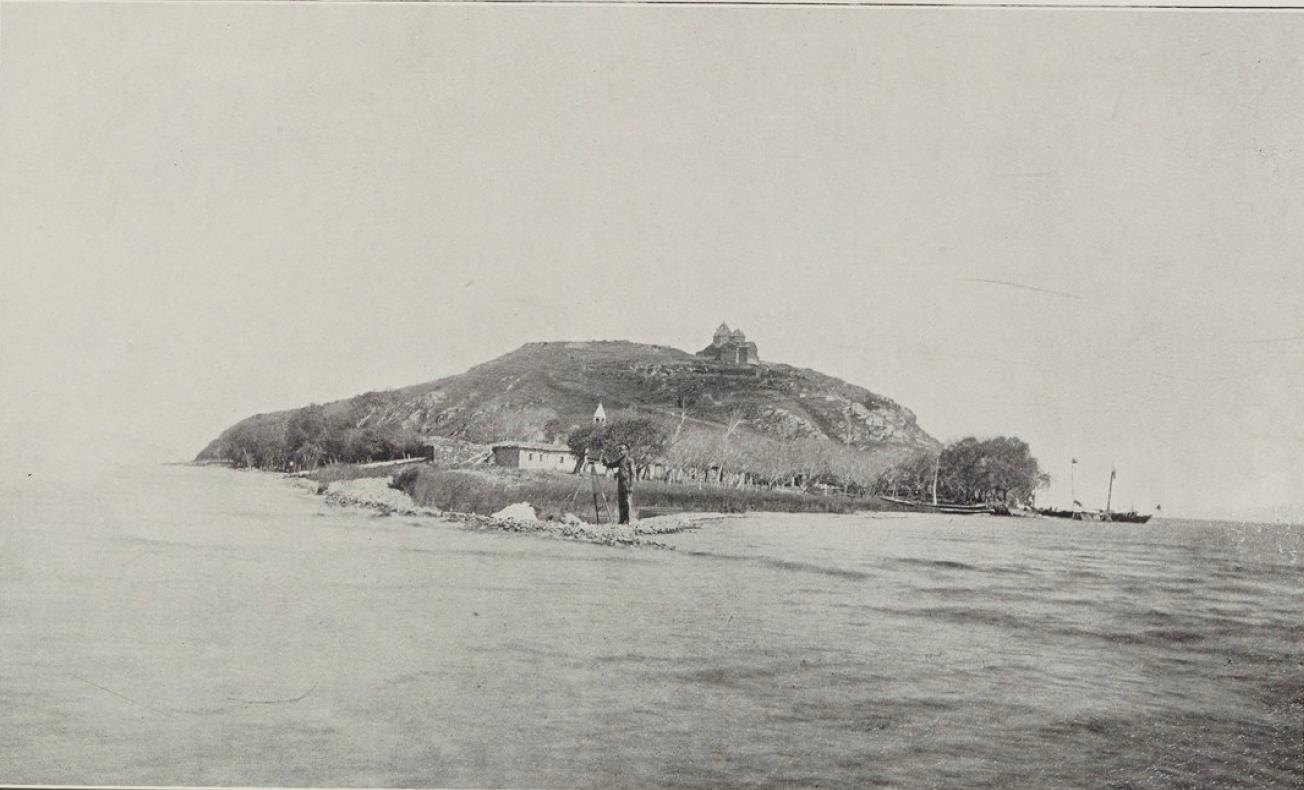
For a small force, the island offered an obvious advantage. The enemy could reach the shore but could not simply continue its advance in the same formation. It needed boats, preparations for a crossing, and a way to land under the threat of missile fire.
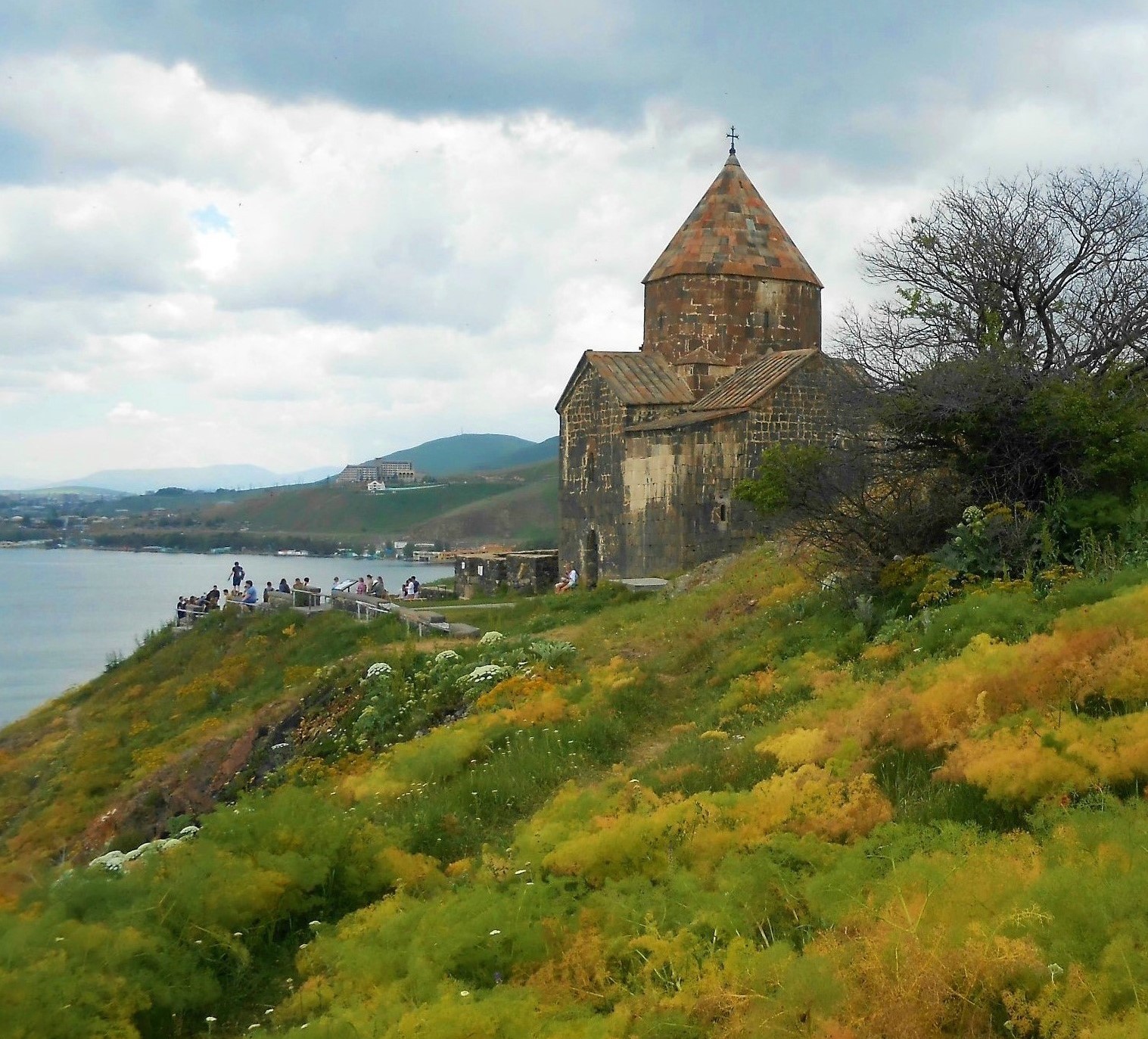
Sevan was not an accidental refuge. Fortifications and a monastic community already existed there. The island combined defensive value with spiritual authority, while the surrounding landscape made it a distinctive point on Armenia's military map.
Yet protection did not mean complete safety. If the king remained cut off from the mainland for too long, his freedom of action would shrink. The island could keep his men alive, but it could not, by itself, restore his authority over the country.
Ashot found a way out by attacking from the very direction where the enemy expected only defense.
Eleven Boats and Seventy Warriors
In the early 920s, an army under the commander Beshir approached Sevan. He intended to strike at Ashot, who was on the island.
Hovhannes Draskhanakerttsi preserved a detailed account. In his narrative, the king orders eleven boats to be prepared. Seventy azats and retainers take their places in them. Azats were members of the free nobility associated with military service.
Ashot sets out with them to face the enemy. As they approach the shore, the Armenian archers strike from the boats. The king himself takes part in the shooting. The enemy army falls into disorder and retreats.
This was an unusual engagement: not a clash between two fleets in the middle of the lake, but an attack by a small force from the water against troops gathered on the shore.
The traditional date of the Sevan victory in Armenian educational literature is 921. Academic studies also propose a different date within the 920s. The account of the victory itself rests on a tenth-century Armenian source.
Its power lies in a clear sequence of action: the king whom the enemy intended to trap on an island sails out to meet it and forces it to withdraw.
Why the Victory Was More Than a Single Battle
It is easy to become absorbed in the number of warriors at Sevan. Seventy men in boats create a vivid, instantly memorable image. The importance of the victory, however, extends beyond the balance of forces.
Ashot survived as an active king and military leader. The enemy failed to end the war by capturing or killing him. For a prolonged resistance, this was a crucial outcome.
The political meaning was no less important. When a country endures defeat for a long time, people begin to accept the enemy's superiority as inevitable. A successful attack changes their sense of what is possible. It shows allies that supporting the king still makes sense and reminds opponents that the outcome of the struggle is not predetermined.
The Sevan victory became one of the turning points in Armenia's liberation. The country, however, was not restored in a single morning. The battle was followed by further operations, the recovery of control over the provinces, and the strengthening of the king's position.
Sevan is therefore best understood as a brilliant high point in a long struggle. Behind it lay years that are harder to capture in a single painting: negotiations, campaigns, the gathering of forces, the holding of fortresses, and the rebuilding of trust.
Gevorg Marzpetuni: History and National Memory
Beside Ashot the Iron in Armenian memory stands Gevorg Marzpetuni.
Muratsan's novel of the same name introduced many generations of readers to this era. In it, the struggle for the state gained human faces, tense dialogue, and a moral center: the willingness to serve one's country even when its situation seems hopeless.
The literary character has a historical foundation. Draskhanakerttsi describes Prince Gevorg and his struggle against the enemy. The prince's connection with the Marzpetuni family became established in later historiography, while the novel made his name a national symbol.
Distinguishing a chronicle from a novel is useful not because it diminishes a beloved hero, but because the two serve different purposes. A chronicle preserves information about events; literature helps a society experience them anew and reflect on its own responsibilities.
Muratsan wrote for the readers of his own age, but his choice of Ashot's era was no accident. It brings into sharp focus a question that does not disappear with the passing of centuries: what should a person do when a common cause is threatened not only by an enemy, but also by divisions among his own people?
What “King of Kings” Meant
Ashot II received the title shahanshah, meaning “king of kings.” Traditional Armenian chronology associates its recognition with 922. Draskhanakerttsi connects the granting of the title with an agreement between Ashot and Sbuq, who succeeded Yusuf after the latter's imprisonment.
The title may suggest an enormous empire. In this case, it primarily expressed seniority within a complex political landscape that included other Armenian royal and princely centers.
Such status strengthened the position of the Bagratuni. External recognition confirmed that Ashot could not be treated as a temporary military leader or a claimant who could easily be replaced.
At the same time, a formal grant and a title did not remove the need to negotiate with the princes. Medieval authority depended on a combination of recognized right and the practical ability to act.
A diplomatic achievement became durable when it was supported by fortresses, troops, allies, and the ability to maintain order. Throughout Ashot's reign, these aspects of politics were constantly intertwined.
Ordinary People Behind the Royal Story
When we read about changes of rulers and military campaigns, it is easy to forget who paid the price of a long war.
For the country's inhabitants, invasion threatened their homes, harvests, livestock, and families. Retreating into the mountains or a fortress could save their lives, but left their fields untended. A lost harvest affected both village life and the ability to support an army.
Restoring royal authority therefore had a very practical meaning. People needed roads they could travel, settlements they could return to, and some assurance that tomorrow would not again force them to abandon everything they had built.
Ashot's history deserves to be read from this perspective too. Behind the words “liberated a province” lay the possibility of restoring ordinary life. A military victory attained its full significance when its gains could be preserved.
The kingdom existed in more than a crown and a genealogy. It existed in the ability to protect people and maintain the ties between them.
What the Iron King Left Behind
Ashot II's reign ended in the late 920s. The most widespread Armenian chronology gives the dates 914–928; some studies identify 929 as its final year.
His brother Abas succeeded him. Armenian statehood continued. This was the principal historical result of Ashot's struggle.
The Bagratuni would later experience an age of flourishing. Ani became the royal capital under Ashot III in 961. Buildings, urban spaces, and works of art would emerge that are now associated with the greatness of medieval Armenia.
Ashot the Iron did not build that future Ani and could not have known what it would become. But the existence of the next era depended on whether the state could survive in his own time.
Sometimes a ruler's historical legacy is visible in the palaces he leaves behind. Ashot's is visible above all in what happened after him: Armenian history continued in the form of a kingdom of its own.
Why We Remember Him a Thousand Years Later
Ashot II had ample reason to consider his situation hopeless: his father's death, invasion, rivalry within the dynasty, unreliable alliances, and the need to fight on several fronts.
His name endured because he continued to act under these conditions. He changed his methods, sought support, used the terrain, recovered lost positions, and defended his country's right to have a sovereign of its own.
This is the measure of Ashot the Iron. He lived at a moment when the fate of the Armenian kingdom depended not on its future opportunities, but on its ability to endure the present.
At Sevan, the story is especially easy to imagine. Before us are water, stone churches, and the shore. A thousand years ago, the question here was whether the king would remain trapped in his last refuge or once again go out to meet the enemy.
Ashot went out.
And Armenia's history continued.
---