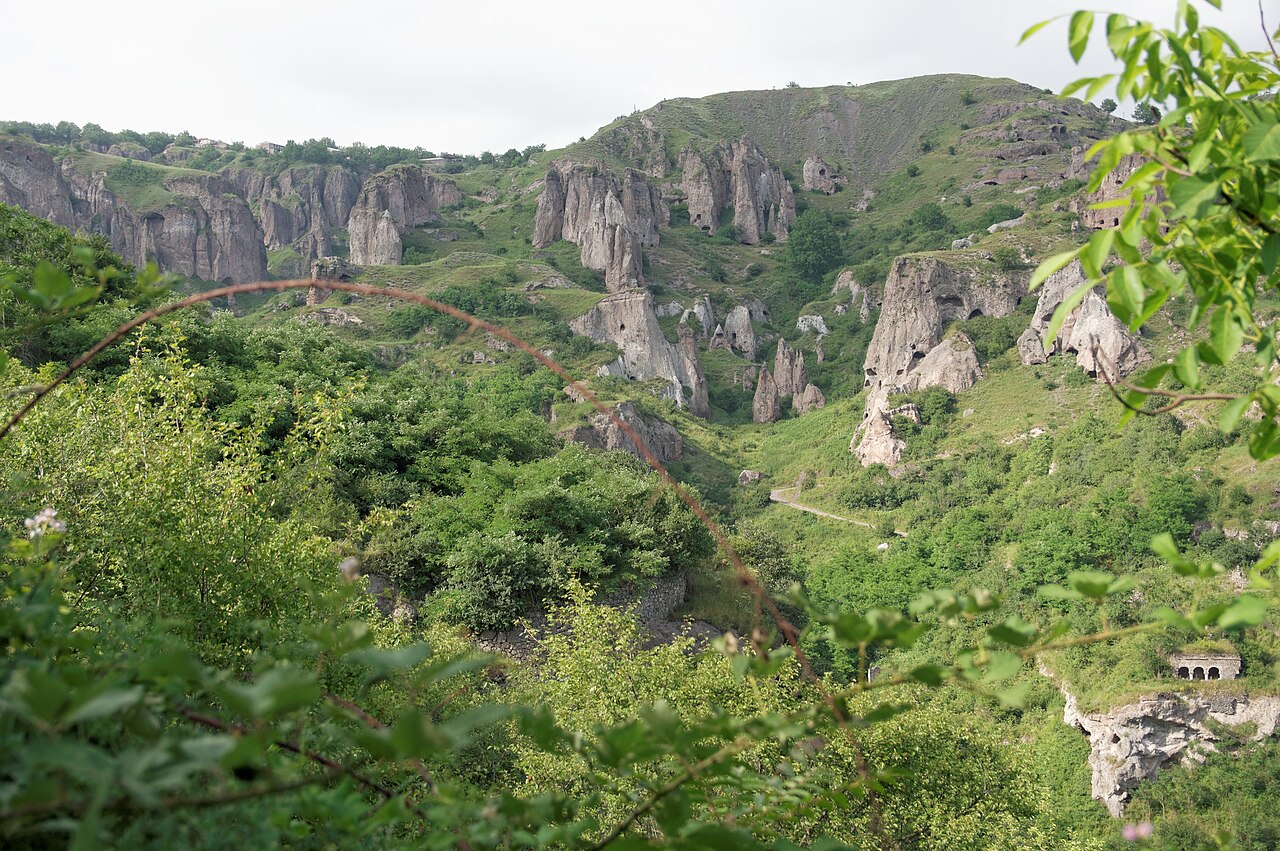
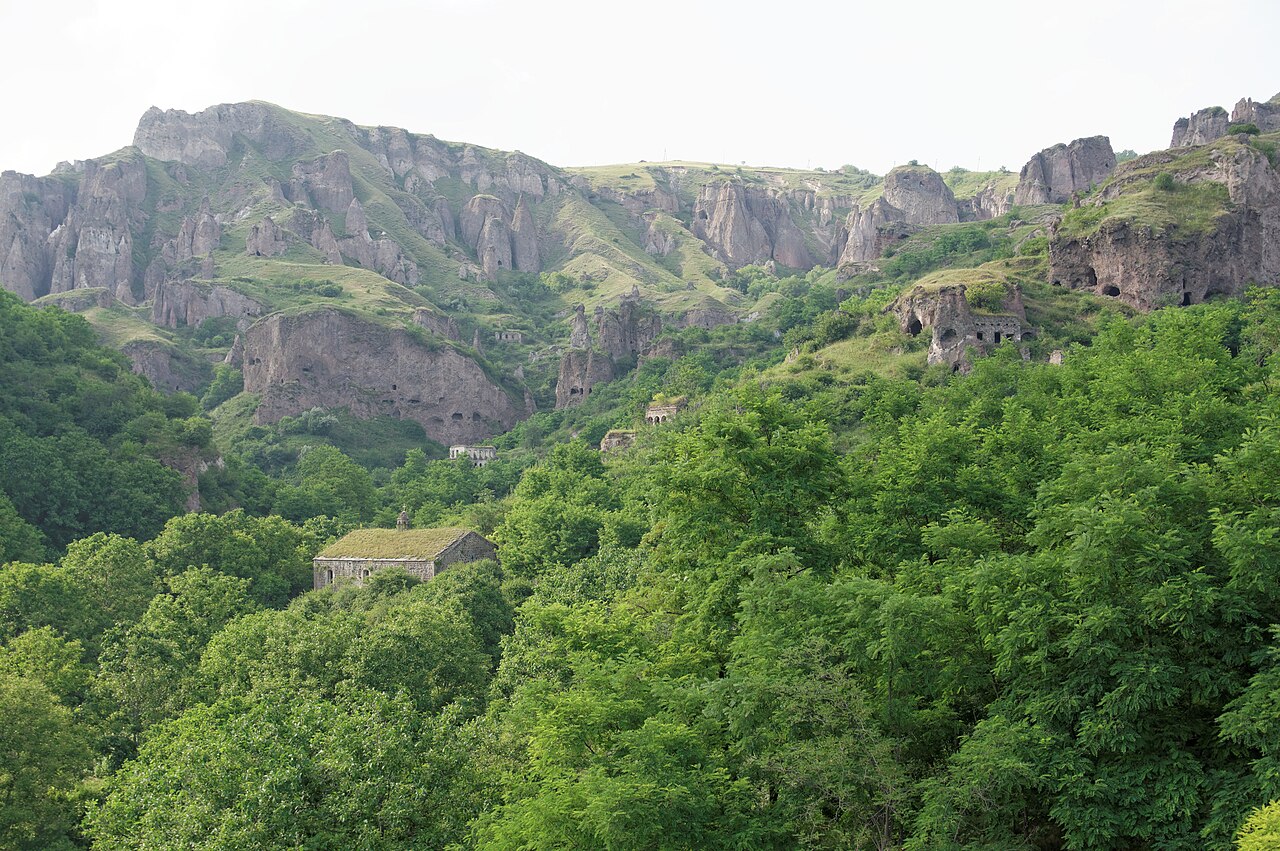
From a distance, Old Khndzoresk seems to grow out of the rock itself. Dark openings punctuate the slopes of the gorge, fragments of walls appear between rocky outcrops, and houses seem to rise above one another. At first, it is difficult to tell where the natural landscape ends and human work begins.
In this village near Goris, in Armenia’s Syunik region, caves still served as homes in the 1950s. Everyday village life unfolded here: people raised children, went to school, worked and attended church. Understanding Khndzoresk means looking beyond its remarkable scenery to a place that generations of families adapted to their needs.
A house shaped by the rock
Khndzoresk’s inhabitants used both natural cavities and spaces cut by hand. There was no single pattern for a home: its size and arrangement depended on the rock and the needs of the family. This was skilled work. A builder had to recognise a future room within an uneven mass of stone and turn it into a usable home.
The slope also determined the village’s layout. With little level ground available, buildings rose on terraces. The roof of a lower house could become the courtyard of a home above it. Familiar distinctions between street, yard and roof became less straightforward; neighbours lived alongside one another on several levels at once.
A lingering look across the gorge helps reveal this arrangement. Individual dark openings gradually form the outline of a settlement. We begin to look for connections: where people entered, where they emerged and how they reached their neighbours. The rock becomes the framework of a carefully organised living environment.
A village of craftspeople and schools
Khndzoresk’s history extends well beyond its caves. The village had schools and churches. Its residents cultivated fields and gardens and kept livestock; its craftspeople included blacksmiths, stonemasons and carpet weavers. Behind the unusual façades was an economy connected to the surrounding land and neighbouring settlements.
Even this short list of occupations changes our view of the old village. Each represents work that had to be learned: shaping metal, laying a wall or growing a crop. A cave house belonged to this everyday world. Its construction speaks of local building knowledge, rather than a separate existence somehow frozen outside time.
The surviving openings cannot tell us who lived in every room. It matters, then, not to replace history with an appealing invention. An overall view reveals the density of the buildings and the difficult terrain; written accounts help restore the inhabitants’ work and community life to the picture.
A church among the hillside homes
One of the old village’s monuments, the Church of Saint Hripsime, offers another way of understanding Khndzoresk. Alongside rooms carved into rock stood a church built of stone. The settlement had places for the community to gather as well as individual family homes.
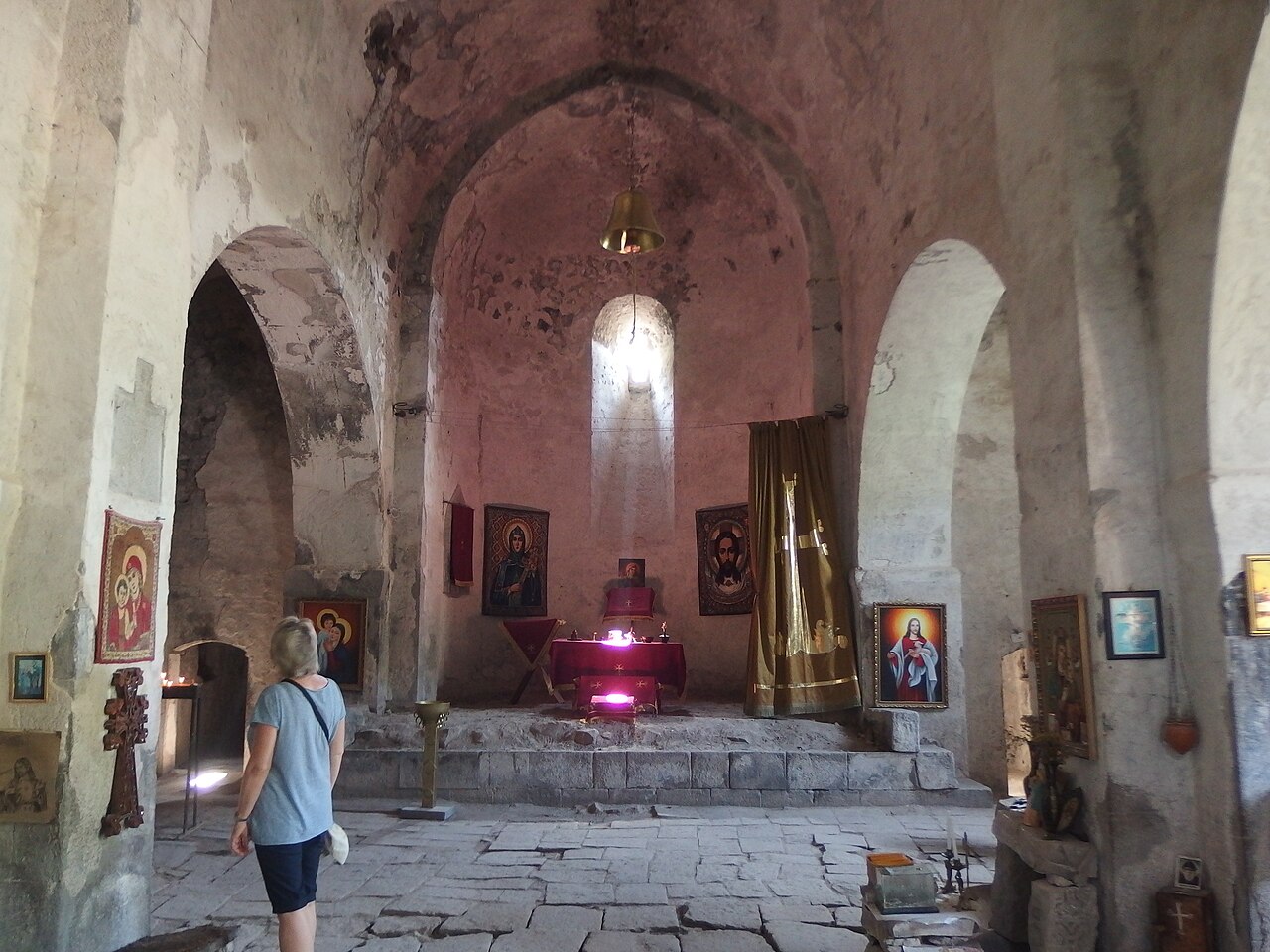
In the photograph of the interior, the eye follows a sequence of arches towards the back of the building. Stone piers establish a clear rhythm, quite different from the irregular outlines of the cliffs outside. After the broad view of the gorge, this interior brings the story to a different scale: a space where the village community gathered.
Such a monument is best understood and preserved with its surroundings. A photograph of the church in isolation tells us about its architecture; seeing the church among the homes helps us understand the organisation of the whole village.
Old Khndzoresk and the village today
The cave homes remained inhabited until the middle of the twentieth century. That relatively recent date matters. Khndzoresk’s history belongs not only to distant centuries but also to the lives of people in the last century.
The modern village stands above the old settlement. Khndzoresk is the name of a living place, so references to “abandoned Khndzoresk” need care. The homes of the old settlement emptied, while the village’s story continued.
Keeping both old and new Khndzoresk in view dispels the impression of a world that simply came to an abrupt end. We can instead recognise a change in the way people lived on this land: the old homes became heritage, while village life continued nearby. That connection tells us more about local culture than the dramatic image of a “lost city.”
A bridge offering a new perspective
Today, one of Khndzoresk’s most recognisable views features its suspension bridge. Spanning 160 metres, it was built in 2012 with local funding and labour. It is a modern structure, not part of the historic system of routes between the homes.
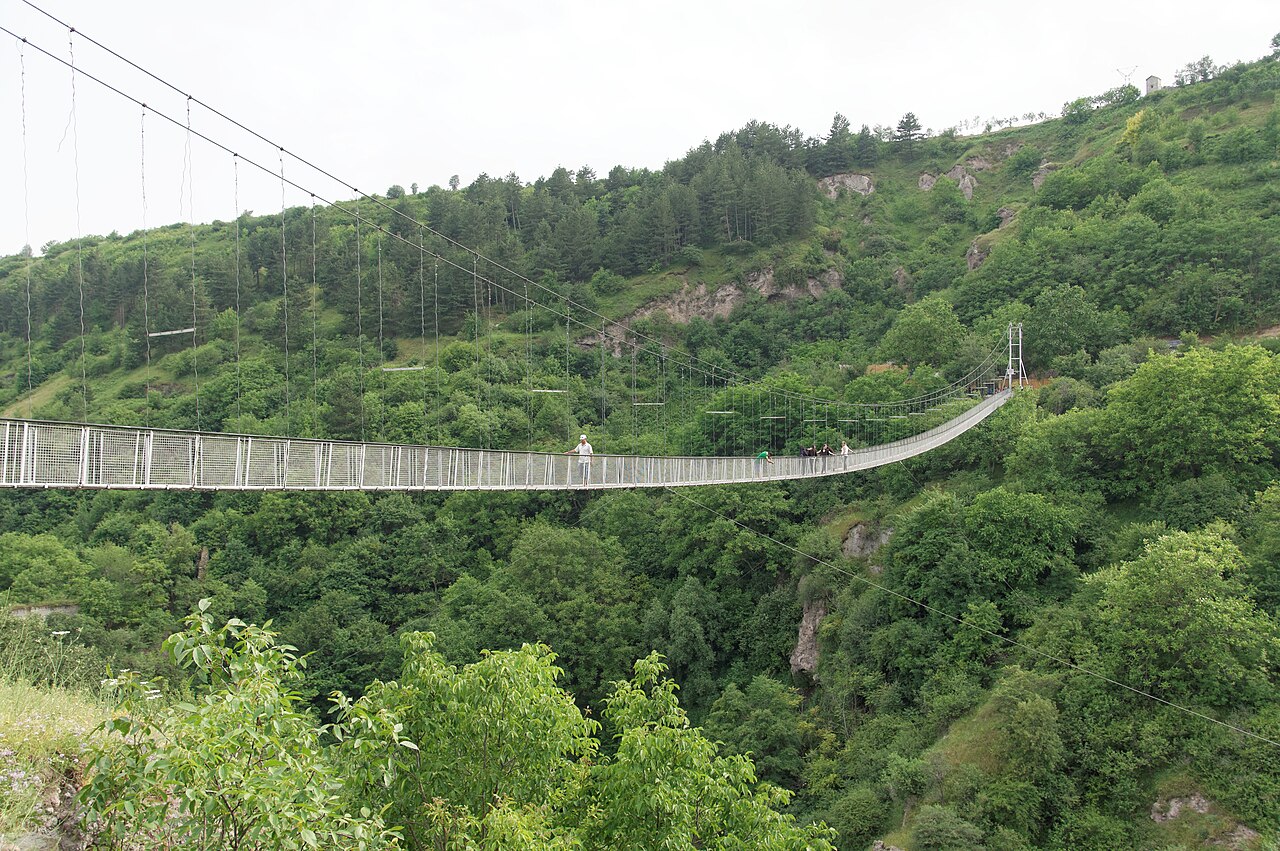
The photograph makes the contrast clear: the narrow line of the walkway crosses a deep gorge, with steep slopes rising beyond. The bridge helps us grasp the distances and changes in elevation. What looks compact in a broad panorama acquires a more tangible scale.
Yet an understanding of this place should not end at the bridge. The most revealing details emerge when we look back at the homes: masonry meeting rock, entrances at different heights, the position of the church. Together, they reveal Khndzoresk as a record of Armenian village culture. Here, it is possible to appreciate the work and ingenuity that turned difficult mountain terrain into a place to live.