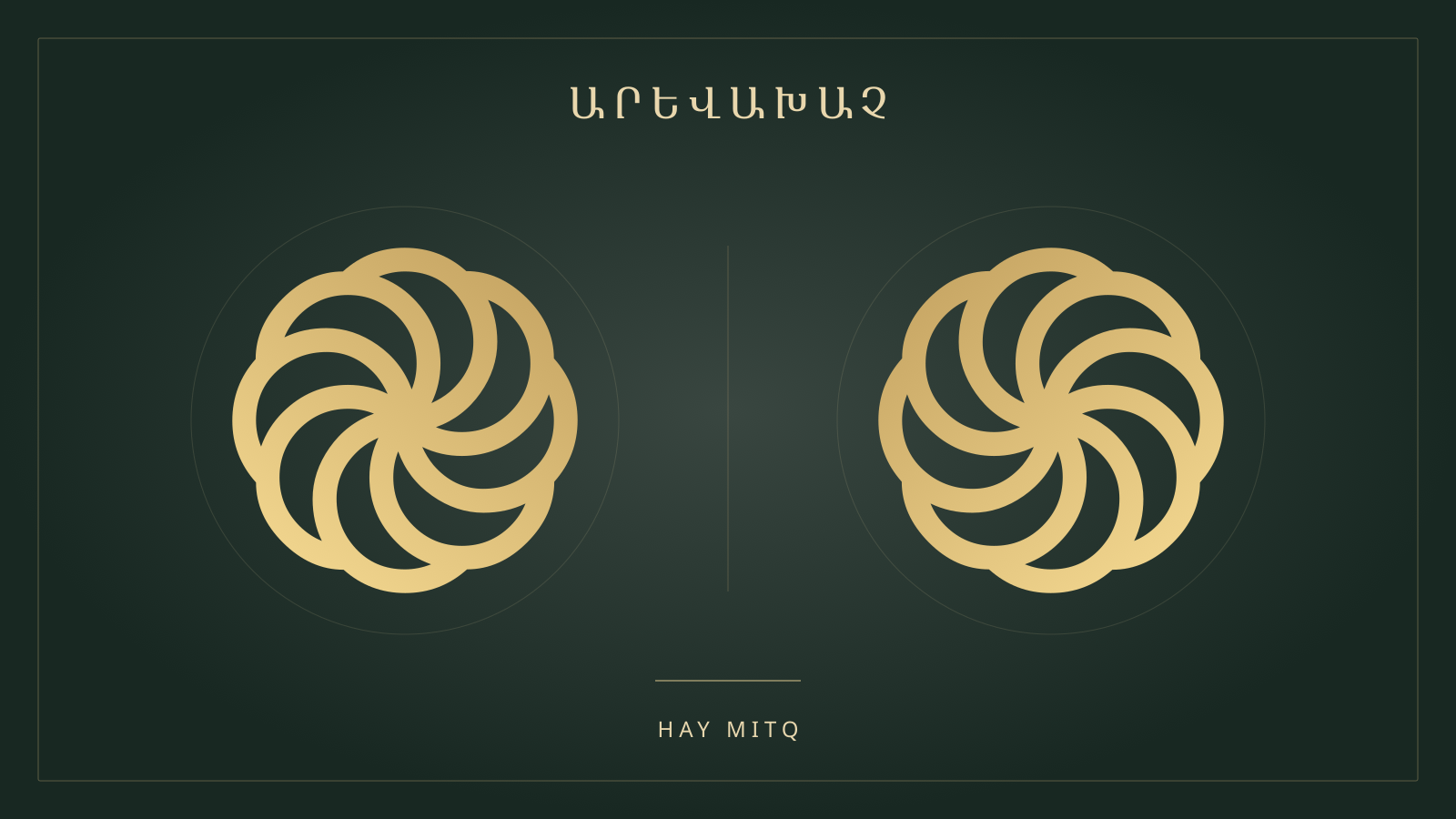
A debate has arisen around the Armenian eternity sign. Some say the direction of its “rotation” makes no difference. Others associate it with masculine and feminine principles. Still others are certain: clockwise means life and development, counterclockwise means death and destruction.
I checked the sources. Both forms have historically been used in Armenian culture. But I found no reliable confirmation of a rule that “one direction always means life, the other destruction.” At the same time, claiming that direction never mattered would also be too categorical.
Let’s look at what is actually known.
Both variants appear on historical monuments
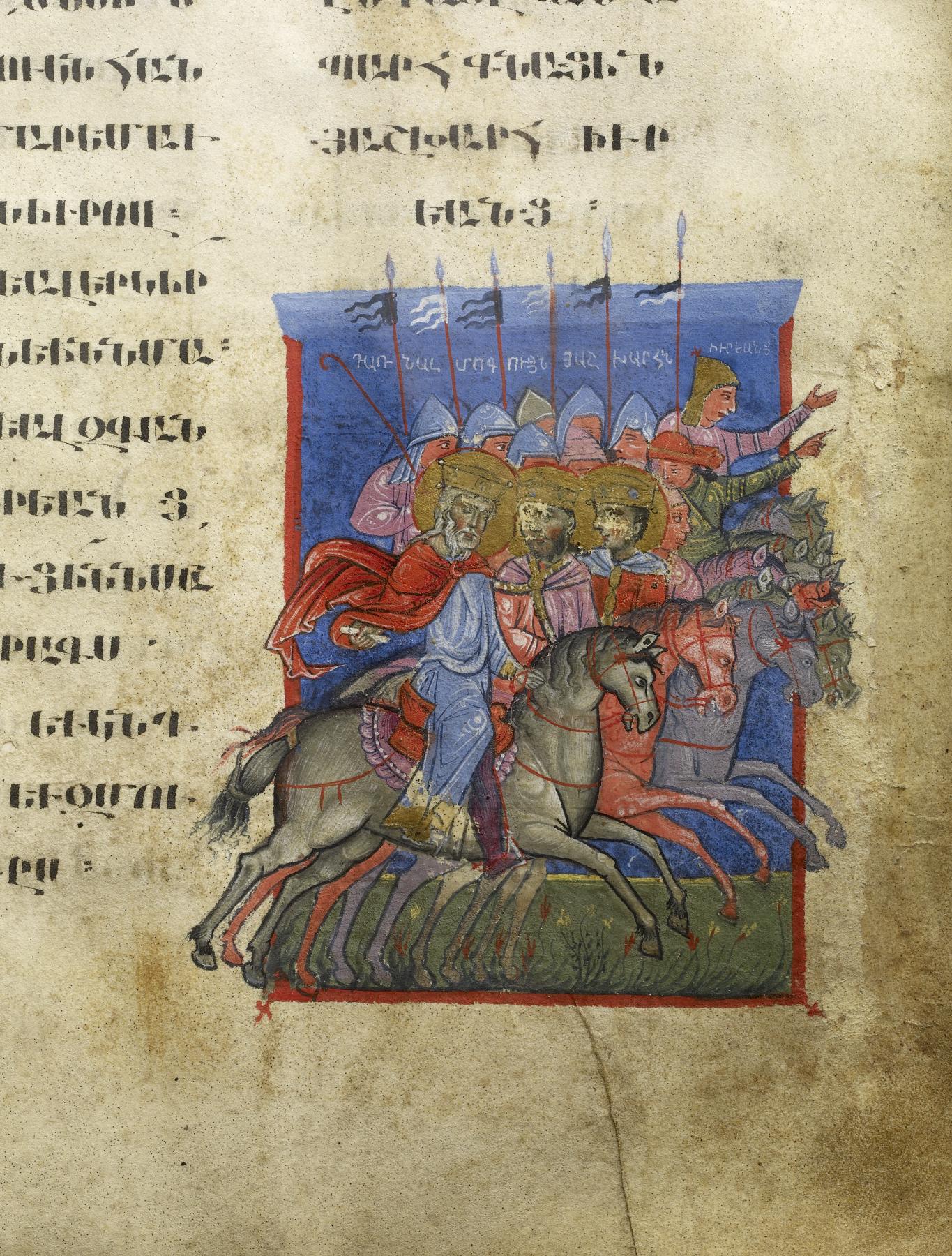
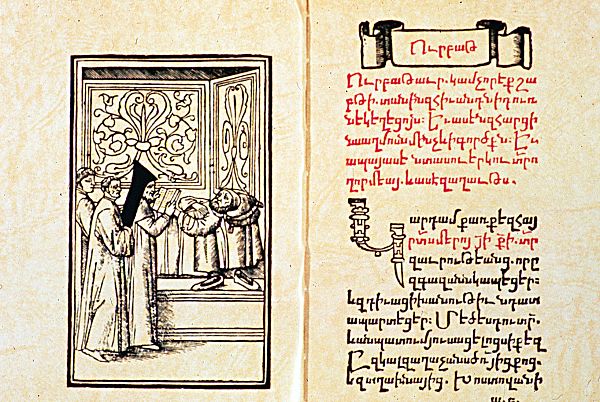
The materials prepared for including the Armenian eternity sign in Unicode provide specific examples: a right-facing sign on a khachkar from the village of Martiros, dated 1499, and a left-facing sign on a khachkar from Jugha, dated 1603 and now in Etchmiadzin. In other words, both forms existed long before modern logos and internet debates.
These images confirm the use of both directions. On their own, however, they do not explain what additional meaning the craftsman intended through the particular curve of the rays.
Masculine and feminine principles: a documented interpretation
In materials submitted by Armenia’s National Institute of Standards in 2010, the right and left directions are associated with active and passive principles, respectively. The same document gives an example: a boy’s cradle is decorated with a right-facing sign, a girl’s with a left-facing one. This explanation really does appear in the document.
But precision matters here. These are materials about standardizing the symbol. The statement about cradles has no accompanying reference to a specific ethnographic study, museum object, region or period. So the document confirms that this explanation exists, but does not prove that all Armenians in every era necessarily distinguished the signs in this way.
It is accurate to say, “There is an interpretation associated with masculine and feminine principles.” Declaring every right-facing arevakhach exclusively masculine and every left-facing one exclusively feminine goes too far.
The “life and death” interpretation also appears. But where does “destruction” come from?
The explanation “clockwise means life, counterclockwise means death” can be found, for example, in the 2001 correspondence archive of a Unicode discussion. A message relays the words of a member of the ArmSCII working group. However, no historical references accompany that explanation. And a letter in a discussion archive is neither a scholarly conclusion nor an officially established meaning of the symbol.
So it is fair to say that this interpretation is known. But its existence does not prove a universal ancient rule.
Moreover, death, evil and destruction are different concepts. In khachkar symbolism, life, death and resurrection are considered interconnected parts of a religious understanding of human existence. An image’s presence on a gravestone does not, by itself, make the sign an expression of evil or a wish for someone’s death.
The general meaning of eternity has the strongest support
Studies of medieval Armenian art associate this sign with eternity and the hope of life after death. This is the meaning examined, for instance, by Lorenzo Dominioni and Antranik Balian in an article in the Journal of the Society for Armenian Studies. To understand a particular image, we need to consider the monument as a whole and its content. The direction of the curls alone is not enough for a confident interpretation.
My conclusion is this
Both directions of the arevakhach belong to Armenian tradition. The distinction may have mattered within a particular custom or artistic intention. An interpretation involving masculine and feminine principles is recorded in modern documents, but it cannot automatically be applied to every monument. And the claim that a left-facing sign necessarily means death, evil and destruction is not supported by the sources checked.
If someone calls your arevakhach “incorrect,” it is worth asking a simple question: which historical source establishes this rule, and which period does it refer to?
Hay Mitq