Imagine that a historian a thousand years from now is trying to understand our age.
There are no social networks.
No archives of private messages.
No photographs.
No banking apps.
Only walls remain.
What would we write on them if we knew that those words might outlive us by ten centuries?
Medieval Armenians left an answer.
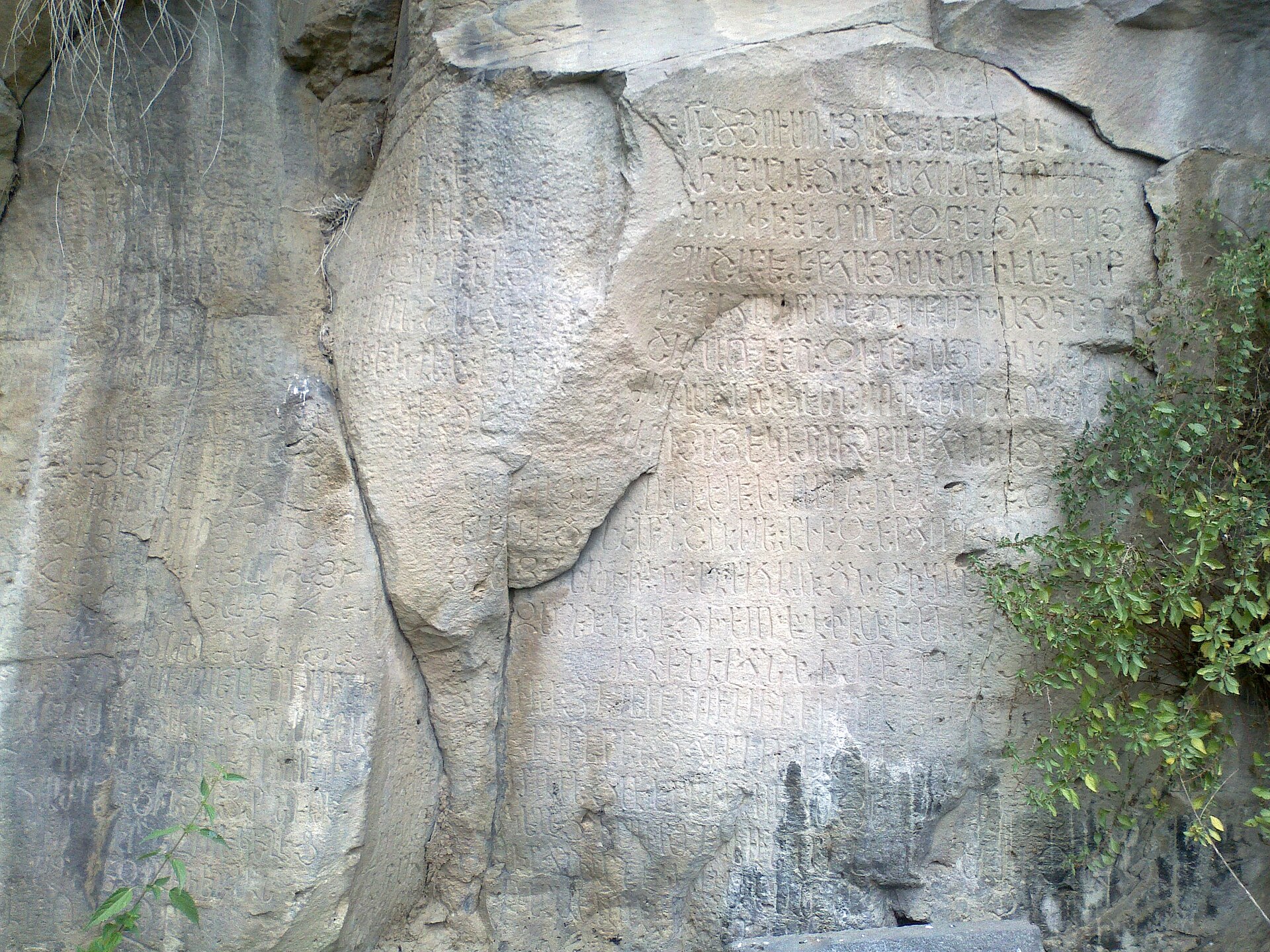
On the walls of churches, monasteries, fortresses, bridges, and khachkars, they carved far more than prayers.
You can find the names of builders and princes.
Agreements.
Donations of land and vineyards.
Instructions specifying how many liturgies should be celebrated in memory of a person.
Information about taxes.
The names of villages.
The names of people long forgotten.
Warnings to anyone who dared violate an agreement.
And sometimes, actual curses.
A medieval Armenian wall could function at the same time as a monument, a legal document, an archive, and a message to the future.
That is why epigraphy — the study of inscriptions on durable materials — can provide historians with information that even chronicles sometimes do not preserve.
A chronicler might write about kings and wars.
A wall might tell us who donated a garden to a monastery.
Who owned a mill.
Who built a gavit.
What a vanished settlement was called.
And what would happen to anyone who tried to seize land that had been donated.
The most fascinating feature of these inscriptions is their specificity.
A medieval person was not necessarily trying to tell us “the history of Armenia.”
He was solving a practical problem.
He wanted to formalize a donation.
Ensure prayers after his death.
Record ownership.
Preserve his name.
That is precisely why these texts can feel so unexpectedly alive centuries later.
Donation inscriptions are common on the walls of Armenian monasteries.
A person might record that he had given the monastery land, a garden, a vineyard, a mill, a house, livestock, or another source of income.
In return, the monastic community might promise to perform a certain number of liturgies in memory of the donor and his family.
In effect, this was a contract.
One side transferred property.
The other accepted an obligation.
The difference is that instead of being stored in a notarial archive, the agreement was carved directly into the wall.
And this had an obvious advantage.
A paper document could be lost.
Hidden.
Destroyed.
Forged.
Try quietly destroying several lines carved into the façade of a church visible to the entire community.
Stone transformed a private agreement into a public fact.
That is why medieval Armenian inscriptions sometimes resemble modern public registries.
The architecture itself served as the registration system.
Some monastery inscriptions list donated property in detail.
Vineyards appear frequently.
In the Middle Ages, a vineyard was not merely a picturesque landscape.
It was an asset.
A source of harvest.
Wine.
Income.
So information about who donated it and who now owned the land had very practical value.
Such details are especially important for economic historians.
A short inscription can reveal that vineyards existed in a particular region, who owned the land, and what kinds of economic relationships connected monasteries with local elites.
Medieval inscriptions on the church of Mren mention donations of vineyards.
Other monastic texts refer to gardens, plots of land, villages, and economic installations.
Gradually, it becomes clear that a medieval monastery was not only a place of prayer.
It could be a major landowner, an educational center, a repository of valuables, and an important participant in the regional economy.
It is even more interesting to ask what the donor received in return.
Not profit in the modern sense.
Memory.
In inscriptions, we find agreements stating that on specific days a liturgy should be celebrated for the donor or his relatives.
Sometimes a particular feast day or number of services was specified.
A person was, in effect, trying to make an agreement with time.
He transferred material value in the present so that his name would continue to be spoken after his death.
For a medieval Christian society, this had religious meaning.
But it was also a way of preserving memory.
That is why, seven or eight centuries later, we still know the names of people who might otherwise have disappeared completely from history.
Donors often thought not only about themselves.
Inscriptions could list spouses, children, parents, and other members of the family.
The wall became a family archive.
Sometimes a single text allows historians to reconstruct part of the genealogy of a princely house.
This has happened, for example, with inscriptions from Dadivank: researchers have used them not only to study the monastery itself, but also to clarify family ties within the princely house of Khachen and to identify old geographical names.
The result is remarkable.
A medieval person commissioned an inscription for the salvation of his soul and the preservation of his memory.
Centuries later, a historian reads it like a database.
But not all inscriptions were peaceful requests for remembrance.
Medieval legal formulas could be much harsher.
If someone donated property to a monastery, he wanted to make sure that twenty, fifty, or a hundred years later a new prince, relative, or official would not take the gift back.
What do you do if the state system for enforcing agreements is limited?
You add an eternal penalty to the contract.
A curse.
Armenian walls preserve warnings aimed at those who might violate what had been written.
The formulas could promise divine punishment, excommunication, or the same fate as biblical traitors and sinners.
Today, that may sound unusual.
But in medieval society, such language was not decorative.
It reinforced an obligation with moral and religious authority.
One 10th-century inscription at Tzarakar, after mentioning a donation, warns that anyone who acts against the recorded terms will be cursed.
Another medieval donation text threatens a violator with a place among the accursed and “a share with Satan.”
This was, in effect, a legal clause of its time.
A modern contract may end with provisions about court jurisdiction and liability.
A medieval one could end with a threat of eternal damnation.
Inscriptions from the 13th century can be especially vivid.
In one donation text from Dadivank, a prince records estates granted to the monastery and then warns anyone who removes the gift or abolishes the established liturgy.
The violator is cursed by the 318 Fathers and associated with Judas and other condemned figures of Christian tradition.
Why 318?
The number refers to the traditional number of Fathers at the First Council of Nicaea.
A medieval reader would have understood that formula much better than we do today.
It did not simply mean “I will be very angry.”
It placed the potential violator against the authority of the Church itself.
But the walls do not speak only about wealthy princes.
Sometimes a short inscription brings back a person about whom we otherwise know almost nothing.
On one wall of the ancient church at Mren, a small text survives whose meaning is essentially a request to remember a local priest.
A few words.
A name.
An occupation.
And more than a thousand years later, that person still exists for us through a single line.
This is where the difference between “great history” and “small history” becomes especially clear.
Great history remembers Emperor Heraclius.
The Bagratid kings.
Wars.
Dynasties.
A small inscription can preserve the name of a village priest.
Both histories can exist on the same wall.
Stone inscriptions also recorded construction itself.
Today, a visitor looks at a church and sees architecture.
A medieval visitor might also see a text explaining who built the structure, under which ruler, under which bishop, and for what purpose.
Sometimes such a text is what allows historians to date a monument.
Or, in other cases, it creates a new problem because part of the inscription has been damaged.
At Mren, a large 7th-century construction inscription survives on the façade, mentioning the Byzantine emperor Heraclius, representatives of the Armenian nobility, and church authorities.
Part of the text is missing.
That is one reason scholars have debated the church’s exact construction date for decades.
Stone seems permanent.
The text on it is not.
An earthquake can destroy a wall.
A stone block can be reused in another building.
An inscription can slowly erode under rain and frost.
Sometimes people destroy it.
There are cases where 19th- or 20th-century scholars copied a text, but the stone itself was later lost.
Then the old researcher’s copy becomes the only evidence that the inscription ever existed.
That forces us to rethink what the word “source” means.
A historical source is not necessarily an ancient object safely preserved in a museum.
Sometimes a source exists only because, a hundred years ago, someone stopped in front of a crumbling wall and copied the letters into a notebook.
Medieval Armenian epigraphy is also remarkable for the sheer amount of information it could contain.
By the 11th century, long inscriptions had become so common that stone carvers had to economize on space.
They used abbreviations and special writing conventions.
The reason was practical: a limited surface had to accommodate lengthy charters, decrees, legal decisions, donation records, and commemorative texts.
This is far removed from a simple sentence such as “so-and-so built this church.”
A wall could carry an actual document.
We are used to thinking of a church primarily as architecture.
For a medieval person, however, the façade could also be an information space.
One inscription recorded a donation.
Another, a construction project.
A third, legal rights.
A fourth asked for prayers.
A fifth warned future violators.
In a sense, walls functioned at once as notice boards, notarial archives, and memorial pages.
And they were not intended only for their contemporary audience.
Phrases meaning “let them remember” or “remember” were directed from the start toward those who would come later.
Future generations of monks.
Parishioners.
Travelers.
Us.
This can be seen especially clearly at Geghard.
Today, a visitor may pass dozens of inscriptions without noticing them because the eye is drawn first to the architecture, the carved crosses, and the rock-cut chambers.
But UNESCO specifically notes that the interior walls of the complex contain numerous inscriptions recording donations.
For a person in the 13th century, these texts were as much a part of the monastery as the arches and columns.
The architecture told you where you were.
The inscription told you who supported the place and through whose gifts it existed.
At Haghpat, an inscription near the entrance to the bell tower records the name of the person under whom it was built and the date of construction.
Texts like these allow archaeologists and architectural historians to reconstruct the biography of a building almost literally.
Without them, dating might depend only on masonry style or comparison with other monuments.
A single line on a wall, however, can provide an exact year.
Another unexpected source is the khachkar.
A khachkar could record the name of the patron, the craftsman, the reason for its erection, or a request for remembrance.
At Geghard, for example, one inscription preserves the names of the craftsmen Timot and Mkhitar, who created a khachkar in 1213.
Without that line, we would have only a beautiful medieval stone by an unknown artist.
With it, two people appear.
Timot.
Mkhitar.
And a date.
1213.
Details like these make epigraphy almost a time machine.
A chronicle often tells us what happened to a state.
An inscription can tell us who actually held the carving tool.
There is another category of inscription especially valuable to historians: place names.
A person recording a donation might list villages, lands, rivers, or localities included in the gift.
Some of those names later disappeared or changed.
Then the stone becomes a map.
A researcher compares the inscription with chronicles, later documents, and modern geography and tries to identify where a vanished settlement once stood.
A single line can therefore help reconstruct not only a person’s biography, but the map of an entire region.
Sometimes a medieval inscription can even clarify the history of a modern city.
One of the early medieval references to Yerevan is connected with a 9th-century church inscription mentioning possessions or donations associated with Yerevan.
In other words, part of the history of the modern city’s name survived not in an elegant royal chronicle, but in a text carved into a church wall.
That is the greatest strength of such sources.
They preserve what the original author did not even consider “great history.”
To him, the name of a village was obvious.
The name of a relative was known to everyone around him.
The boundary of a field was clear to the neighbors.
The number of donated animals was merely a practical detail.
A thousand years later, those “ordinary” details become priceless.
A revealing example from a much later period comes from the monastery of Saint Hripsime.
Researchers found a donation inscription recording the transfer of fifty sheep to the monastery for breeding.
Fifty sheep.
This is not a battle.
Not a royal coronation.
Not a theological treatise.
But for an economic historian, that one line may reveal more about the monastery’s economy, forms of donation, and the material reality of church life than many lofty texts.
That is why walls need to be read literally.
Another Armenia survives in them.
Not only the land of kings and commanders.
The land of vineyards.
Mills.
Gardens.
Monks.
Craftsmen.
Family donations.
Property disputes.
People who feared that someone generations later might violate their wishes.
People who wanted to be remembered.
There is a temptation to think of a medieval inscription as something solemn and distant.
But if we remove the old spelling and religious formulas, many situations become surprisingly familiar.
“I built this.”
“I donated this land.”
“This belongs to the monastery.”
“Remember my family.”
“Do not break the agreement.”
“If you do, there will be consequences.”
The language of legal documents has changed.
The human desire to secure rights, property, memory, and personal will has changed much less.
That is why inscriptions on Armenian walls are not merely decorative remnants of the past.
They are voices.
Sometimes loud and official.
Sometimes personal.
Sometimes threatening.
Sometimes only a few words.
Most people in the Middle Ages did not leave autobiographies.
They did not write memoirs.
They did not appear in chronicles.
But some of them left a name in stone.
And a thousand years later, that was enough for us to read it again.