High on a plateau above the deep gorge of the Akhurian River stand the ruins of a city that, a thousand years ago, was one of the political, religious, and commercial centers of Bagratid Armenia.
Today, Ani lies in modern-day Turkey, about 42 kilometers from Kars and directly near the border with Armenia. Yet its historical importance far exceeds the scale of the ruins visible today. In the 10th and 11th centuries, Ani was one of the principal capitals of the Armenian world. The city became known as the “city of forty gates” and the “city of 1,001 churches.” These expressions should not be understood as precise counts of gates or churches. Rather, they reflected the impression of exceptional scale and wealth that Ani left on contemporaries and later generations. Ani, however, was not merely a city of churches. It contained palaces, massive fortifications, markets, residential quarters, bridges, workshops, and many other structures typical of a major medieval urban center.
Before the Bagratids Ani’s history is much older than the Bagratid Kingdom itself. The area had been inhabited since ancient times. UNESCO notes that evidence of settlement in the region reaches back as far as the Bronze Age. In the early Middle Ages, Ani belonged to the Armenian princely house of the Kamsarakans. Later, the Bagratids acquired the territories of Shirak and Arsharunik, including Ani. Over time, the Bagratuni dynasty emerged as the dominant political force across much of Armenia. In 884, under Ashot I Bagratuni, the Armenian monarchy was restored after an interruption of several centuries. Ani, however, was not the first capital of the restored kingdom. The Bagratid royal court had previously been based at Bagaran, Shirakavan, and Kars. Only in 961 did King Ashot III transfer the capital to Ani. That decision transformed the future of the city.
Why Ani? Ani occupied an exceptionally favorable location. The city stood on a naturally defensible plateau surrounded by deep ravines. This terrain made the city easier to protect while also allowing it to control important routes through the region. During the 10th and 11th centuries, trade routes passed through this area connecting Byzantium, Iran, Syria, the Caucasus, and Central Asia. UNESCO also links Ani’s rapid development to its location on an important branch of the Silk Road. The city’s prosperity therefore did not depend solely on the presence of the royal court. Merchants, goods, and money passed through Ani. Crafts, construction, and services connected to caravan trade developed rapidly. The city gradually became not only an administrative capital but also a major economic center. In 992, the seat of the Armenian Catholicos was transferred to Ani. As a result, the political capital also became one of the most important religious centers of Armenia.
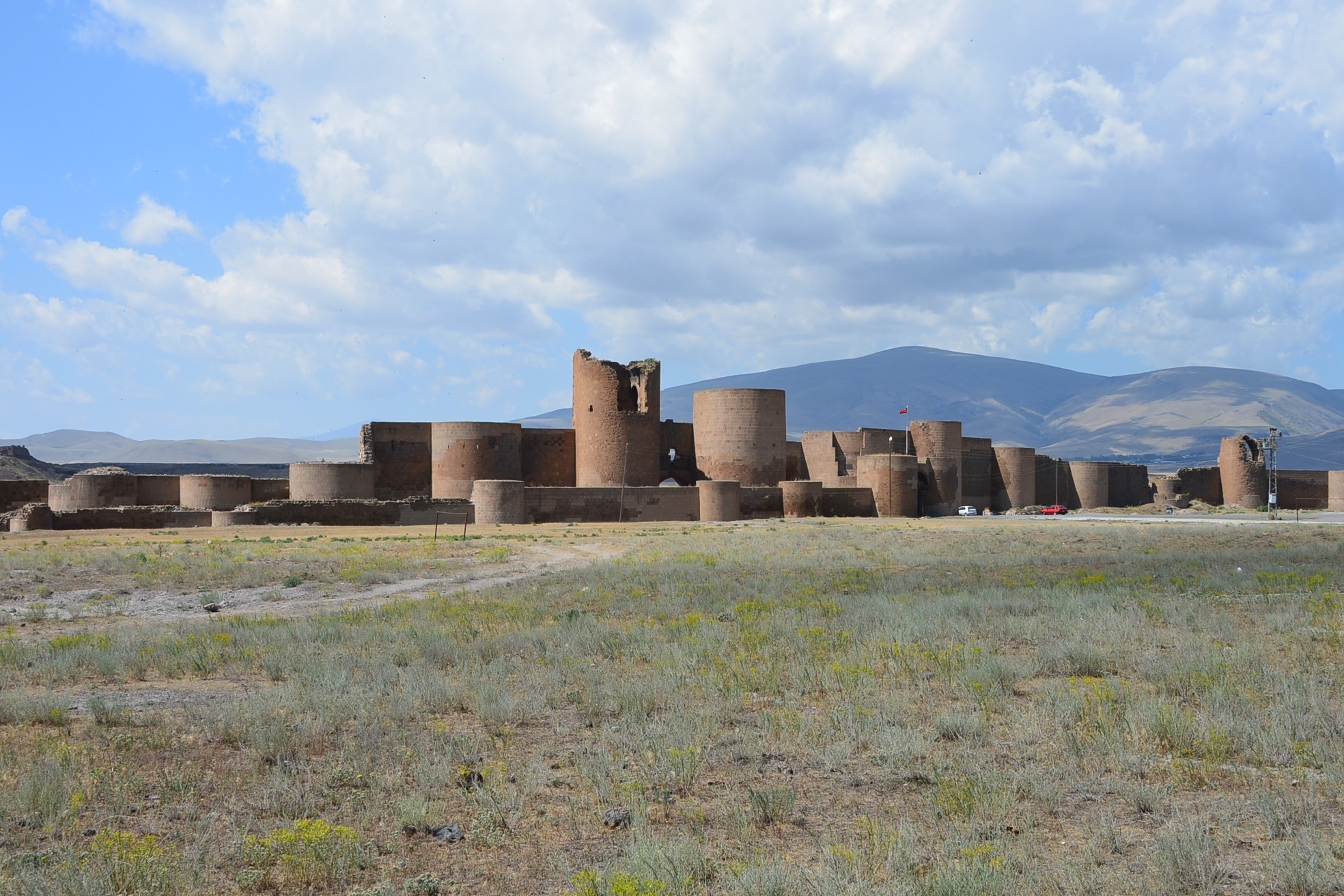
The Golden Age Ani developed especially rapidly under Smbat II and Gagik I. Under Smbat II, the city received a new and powerful system of fortifications. Monumental double walls were constructed in the northern sector. According to UNESCO documentation, the total defensive system extended for nearly five kilometers. During the reign of Gagik I, from 989 to 1020, the Bagratid Kingdom and its capital experienced a remarkable period of cultural and architectural growth. Encyclopaedia Iranica has described this era as a kind of “Bagratid Renaissance.” The population of Ani, however, should be discussed cautiously. Popular publications often cite a figure of around 100,000 inhabitants, but the exact population of a medieval city is extremely difficult to establish. Encyclopaedia Iranica offers a more cautious estimate of perhaps around 50,000 inhabitants. For that reason, no single figure should be presented as an undisputed fact. Even with the lower estimate, Ani was still a very large urban center for its time.
The Cathedral Designed by Trdat One of Ani’s greatest symbols was the Cathedral of the Holy Mother of God. Construction began in 989 under Smbat II and was completed around 1001, during the reign of Gagik I. The architect was Trdat, one of the few medieval Armenian architects whose name has been preserved in written sources. The cathedral stood out for its scale and sophisticated interior spatial design. Its architecture used massive supports, arches, and strongly emphasized vertical forms. At the same time, caution is necessary when discussing the popular claim that Ani Cathedral directly “anticipated European Gothic architecture.” Similarities between certain architectural solutions are indeed discussed by scholars, but the direct derivation of European Gothic architecture from Ani is not an established historical fact. This does not diminish Trdat’s achievement. UNESCO regards the architectural tradition of Ani as exceptional evidence of the development of medieval Armenian architecture.
What Does “1,001 Churches” Mean? Medieval Ani genuinely contained an unusually large number of religious buildings. Among the surviving or archaeologically documented structures are the cathedral, several churches dedicated to Saint Gregory, the Church of the Redeemer, the Church of the Holy Apostles, and numerous other churches and chapels. However, the phrase “1,001 churches” is better understood as a symbolic description of an immense ecclesiastical city rather than literal statistics. The name became deeply associated with Ani’s historical image. UNESCO documentation notes that after the Catholicosate was transferred to the city, Ani acquired exceptional religious importance and became known as the “city of 1,001 churches.” Ani was, first and foremost, an Armenian capital of the Bagratid period, but its later history also gave the city a more complex cultural character. The site preserves monuments from different periods: Christian churches, Islamic structures, civic buildings, palaces, baths, and commercial infrastructure. UNESCO considers this layered character to be one of the important features of the archaeological site. The End of the Armenian Kingdom at Ani After the death of Gagik I, the political situation changed. The kingdom was divided between his heirs, while the Byzantine Empire became increasingly involved in Armenian affairs.
The last Bagratid king of Ani was Gagik II. In 1042, he was placed on the throne with the support of influential Armenian nobles, including Vahram Pahlavuni. Soon afterward, however, Byzantine Emperor Constantine IX summoned Gagik to Constantinople. Following political pressure and negotiations, Gagik II lost his kingdom. In 1045, Ani passed under Byzantine rule. This marked the end of Ani’s period as the capital of an independent Bagratid Armenian kingdom. The Year 1064 Byzantine control did not last long. In 1064, the city was captured by the forces of the Seljuk sultan Alp Arslan. Afterward, the administration of Ani was transferred to the Muslim Shaddadid dynasty. However, the conquest of the city did not mean the immediate end of Ani. This point is important because the history of the city is sometimes oversimplified into a formula of “Armenian capital — conquest — destruction.” In reality, Ani continued for several centuries to remain a significant settlement and commercial center. At different times, the city came under the control of various political powers, including the Shaddadids and Georgian rulers. In the 12th and 13th centuries, the Armenian Zakarian princes also played a major role in the region. UNESCO emphasizes that even after the Bagratid period, Ani remained important as a commercial crossroads.
Why Was Ani Abandoned? There was no single event that destroyed the city overnight. Ani’s decline was gradual. Political conquests changed the economic conditions of the region. In the 13th century, the area came under Mongol rule. At the same time, international trade routes were changing, weakening the commercial networks that had once helped Ani flourish. A particularly severe blow came with the powerful earthquake of 1319. The earthquake seriously damaged many of the city’s structures. Part of the cathedral, among other buildings, was affected. UNESCO identifies the Mongol conquest, the 1319 earthquake, and the shift in trade routes as major factors in Ani’s final decline. By the 18th century, the city was almost completely abandoned. What had once been a densely built medieval capital became a vast archaeological ruin.
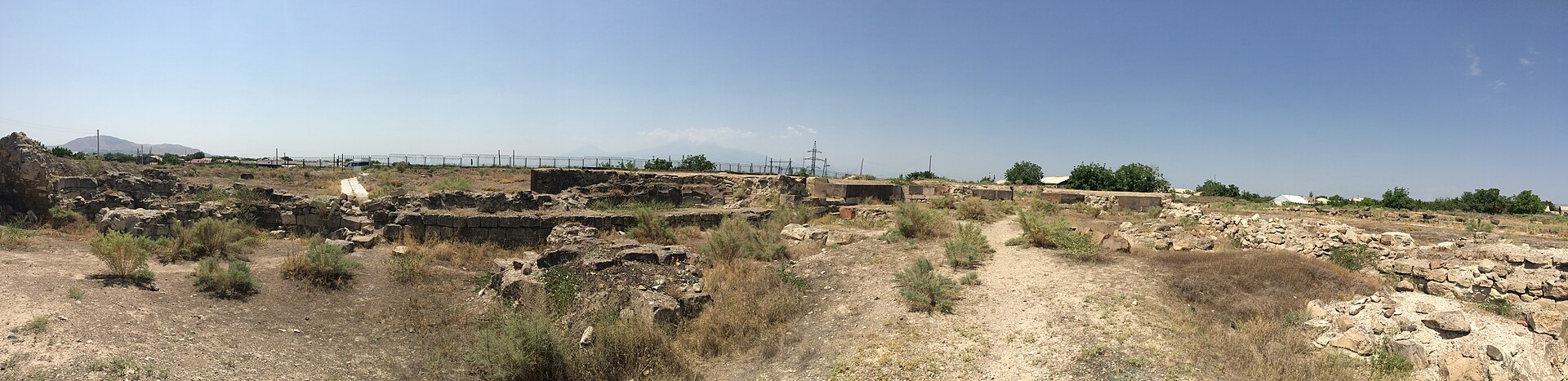
Ani Today The archaeological site of Ani allows visitors to see not simply a single monument, but the structure of an entire medieval city. Sections of the defensive walls survive, along with the cathedral, numerous churches, remains of palaces and residential quarters, parts of the bridge over the Akhurian River, baths, traces of markets, and other urban structures. One particularly important feature is that after the city’s final decline, the area was never substantially covered by a modern city. As a result, the archaeological landscape of Ani has survived more completely than the urban fabric of many other medieval centers. Today, the Archaeological Site of Ani is included on the UNESCO World Heritage List. UNESCO describes Ani as exceptional testimony to the cultural, artistic, architectural, and urban development of medieval Armenian civilization. Ani demonstrates how rapidly a city can rise when political power, trade, religion, and culture converge in one place. It also shows how gradually a city can lose its importance when imperial borders shift and major trade routes move elsewhere. Today, only ruins remain of the capital of Bagratid Armenia. Yet those ruins still allow us to understand the true scale of one of the most important periods in medieval Armenian history.