Beneath the hills of the Ararat Plain, near the modern monastery of Khor Virap, lie the remains of one of the most important cities of ancient Armenia.
For several centuries, Artashat served as a capital of the Armenian kingdom, a major commercial center, and a royal residence. International trade routes passed through the city, armies of Rome and Parthia reached its walls, and centuries later the same area became closely associated with the story of Gregory the Illuminator.
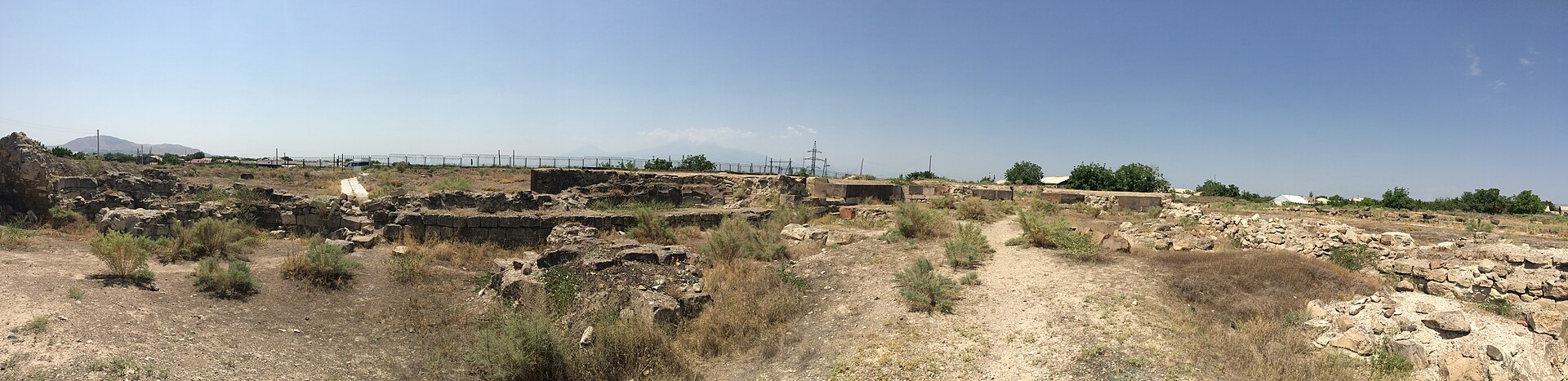
Yet most of the ancient city cannot be seen by visitors today.
It remains underground.
Archaeological research is gradually bringing Artashat out of the written sources and back into tangible history.
The New Capital of Artashes I
The foundation of Artashat is associated with King Artashes I, founder of the Artaxiad dynasty.
After the Seleucid Empire was defeated by Rome at the Battle of Magnesia in 190 BC, the political balance of the region changed.
Artashes, who had previously operated under Seleucid authority, became an independent ruler of Greater Armenia.
His reign marked the beginning of a new phase in Armenian statehood.
Around the 180s–170s BC, Artashes founded a new capital on the left bank of the Araxes River.
It was named Artashat.
The choice of location was far from accidental.
The city stood in the fertile Ararat Plain on a group of hills that were naturally protected by the river and the surrounding terrain.
At the same time, the site allowed control over major routes connecting Armenia with Iran, Mesopotamia, the Caucasus, and the western regions of Western Asia.
Artashat was not intended to be merely a fortress.
It was designed to become one of the principal political, economic, and administrative centers of the new kingdom.
Did Hannibal Really Build Artashat?
One of the most famous traditions connected with Artashat involves a man who was not Armenian at all.
Ancient authors such as Strabo and Plutarch wrote that the famous Carthaginian commander Hannibal, after his defeat in the struggle against Rome, came to the court of Artashes and helped choose the site for the new Armenian capital.
According to this tradition, Hannibal drew the Armenian king’s attention to the exceptional strategic qualities of the location and took part in planning the city.
This is why popular accounts sometimes claim that “Hannibal built Artashat.”
Historically, however, the situation is more complicated.
Ancient testimony about this tradition does exist, but modern scholars treat it cautiously.
There is still no independent and conclusive evidence proving that Hannibal actually stayed at the court of Artashes.
It is therefore more accurate to speak of an ancient historical tradition rather than an established fact.
Even so, the existence of the story itself shows how impressive Artashat appeared in the memory of antiquity.
A City Protected by Nature
Ancient sources described Artashat as a strongly fortified royal city.
Its central area spread across several hills.
The Araxes River, marshy terrain, and the natural landscape created additional defensive barriers, while the more vulnerable approaches were strengthened with man-made fortifications.
Modern archaeological research has confirmed the existence of a substantial defensive system.
But military protection was only one part of the city.
Excavations have revealed residential quarters, public buildings, craft areas, water-supply systems, and other elements of developed urban infrastructure.
Artashat was not simply a fortress containing a royal palace.
It was a major ancient city.
Artashat and International Trade
One of the main reasons for the prosperity of the capital was its location on international trade routes.
Roads passing through Armenia connected the Iranian world and Mesopotamia with the Caucasus, the Black Sea region, and territories belonging to the Roman world.
Artashat was directly integrated into this network.
Merchants and craftsmen lived and worked in the city, while archaeological finds show connections with several cultural regions at once.
Coins, seals, imported objects, and works of art discovered at the site demonstrate contacts with the Mediterranean world, Iran, and the Caucasus.
Armenia of this period was not an isolated land trapped between great powers.
It was itself part of a complex system of international exchange.
Artashat was one of the major nodes of that system.
What Happened Under Tigranes the Great
In the 1st century BC, the Armenian kingdom reached its greatest territorial expansion under Tigranes II, known as Tigranes the Great.
The king founded a new capital, Tigranocerta.
However, the creation of a new royal center did not mean the disappearance of Artashat.
The old capital continued to exist and remained highly important.
After Roman campaigns and subsequent political changes, Tigranocerta lost much of its earlier significance, while Artashat again became one of the principal centers of the Armenian state.
The history of the two capitals demonstrates an important feature of ancient Armenia.
Moving the royal residence did not necessarily mean the immediate decline of the former capital.
Major cities could continue to function and retain importance for centuries.
Rome Against Artashat
Armenia’s geographical position brought not only advantages.
The kingdom stood between two major powers of the ancient world — Rome and Parthia, and later Rome and the Sasanian Empire.
Artashat repeatedly found itself directly in the center of this struggle.
In AD 58, the Roman army under Gnaeus Domitius Corbulo captured Artashat during the war for control of Armenia.
The following year, the city was destroyed.
Yet Artashat’s history did not end there.
After an agreement between Rome and Parthia, the Armenian king Tiridates I traveled to Rome, where in AD 66 he received his crown from Emperor Nero.
Artashat was subsequently rebuilt.
Ancient sources report that Rome provided funds and specialists for the reconstruction of the destroyed Armenian capital.
For a time, the city was even officially renamed Neronia in honor of Nero.
But the new name did not last.
Artashat remained Artashat.
The Roman Aqueduct That Never Worked
One of the most remarkable archaeological monuments of Artashat is connected with the brief period of direct Roman rule.
In AD 114, Emperor Trajan launched a major eastern campaign, and Armenia was declared a Roman province.
The Romans began large-scale construction works.
Archaeologists have discovered near Artashat the foundations of a monumental arched aqueduct intended to provide the city with water.
But the structure was never completed.
In AD 117, after Trajan’s death, the new emperor Hadrian abandoned most of his predecessor’s eastern conquests.
The Roman administration withdrew from Armenia, and construction of the aqueduct stopped.
Nearly two thousand years later, the unfinished project became a unique archaeological witness to how brief direct Roman rule in Armenia actually was.
The City Was Destroyed — and Returned
Artashat experienced more than one military disaster.
In AD 163, the city was again taken by Roman forces.
During the following centuries, the political center of the Armenian state gradually shifted elsewhere, and Vagharshapat became increasingly important.
But Artashat did not disappear.
The city continued to retain economic and administrative importance for a long time.
In the 4th century, Armenia became a major arena of confrontation with the Sasanian Empire.
Artashat suffered heavily during Persian campaigns.
Yet even after these destructions, the city continued to exist.
Its final decline stretched across centuries.
Khor Virap and Gregory the Illuminator
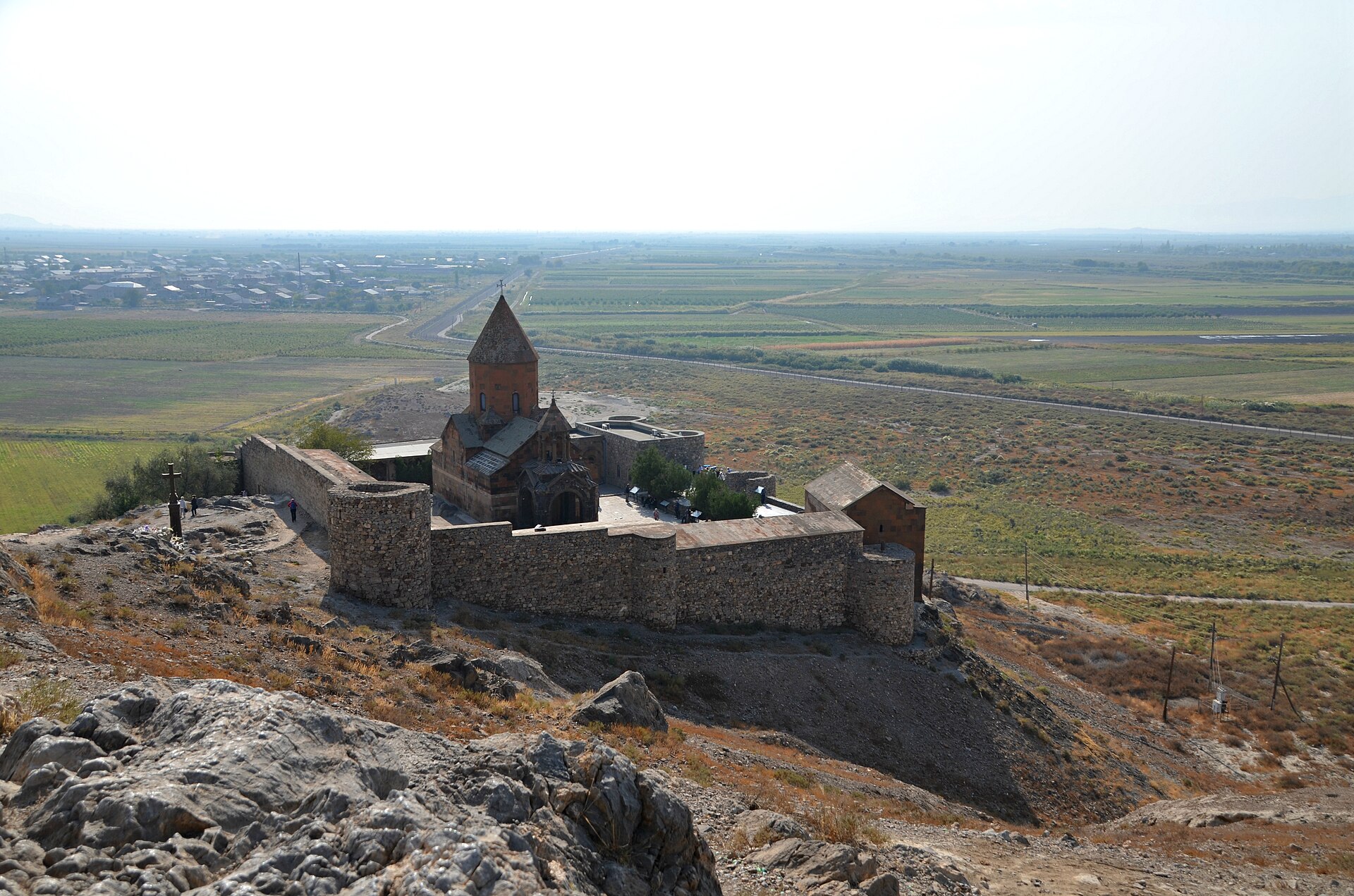
Today, most visitors coming to this part of the Ararat Plain first recognize Khor Virap.
But the monastery stands in an area directly connected with ancient Artashat.
According to Armenian Christian tradition, King Tiridates III ordered Gregory the Illuminator to be imprisoned here in a deep pit.
Tradition holds that Gregory remained imprisoned for many years before being released and later playing a central role in the king’s conversion and the spread of Christianity in Armenia.
A major monastery eventually developed at the site — Khor Virap, one of the best-known religious complexes in Armenia.
Its name itself is associated with the idea of a “deep pit” or “deep dungeon.”
As a result, the same landscape preserves traces of several very different periods of Armenian history.
It brings together the pagan kingdom of the Artaxiads, the conflicts with Rome and Parthia, the Christianization of Armenia, and the later medieval ecclesiastical tradition.
An Unexpected Discovery in the 21st Century
Artashat continues to surprise archaeologists even today.
In 2024, an Armenian-German archaeological expedition announced the discovery of a previously unknown early Christian structure within the ancient city.
Archaeologists uncovered a large octagonal church with cross-shaped extensions.
Researchers date the building to the 4th century.
At present, it is described as the oldest church in Armenia whose existence has been confirmed directly through archaeological excavation.
This is especially significant because the structure belongs to the earliest phase of Christianity in the country.
Fragments of roof tiles, architectural elements, and imported marble were found inside and around the building.
The discovery shows how much of ancient Artashat still remains hidden beneath the ground.
Archaeological research at the site is continuing.
What Did the Real Artashat Look Like?
It is difficult to imagine the true scale of the ancient city from the modern landscape.
Ancient Artashat covered a much larger area than might appear to someone standing near Khor Virap today.
Archaeological investigations have revealed extensive fortifications, urban quarters, workshops, public buildings, necropolises, and various elements of civic infrastructure.
Finds from the site include terracotta figurines, coins, seals, fragments of wall painting, mosaics, and other examples of ancient art.
One of the best-known discoveries is a major Latin inscription connected with Emperor Trajan and the brief period when Armenia was turned into a Roman province.
All of this allows us to see Artashat not as a distant name preserved in ancient chronicles, but as a living city.
It stood at the intersection of Armenian, Hellenistic, Iranian, and Roman cultural worlds.
Why Did Artashat Lose Its Capital Status?
The decline of the city cannot be explained by a single battle or conquest.
Artashat was destroyed, rebuilt, and politically redefined more than once.
Over time, the royal residence shifted to other centers.
The growing importance of Vagharshapat and later Dvin changed the political and economic geography of Armenia.
The course of the Araxes River also changed, affecting conditions in the area of the ancient city.
By the early Middle Ages, Artashat’s importance had declined considerably.
But the city did not vanish without a trace.
Its territory preserved evidence of many centuries of Armenian history, while Khor Virap, rising above the ancient hills today, became one of the country’s most recognizable landmarks.
A Capital That Is Still Underground
Ani impresses visitors with its surviving churches and walls.
Artashat has survived in a different way.
Here, much of the ancient capital still lies beneath the earth.
Its history is reconstructed through foundations, pottery, coins, inscriptions, and modern geophysical research.
That is why every new archaeological discovery has the potential to significantly change or expand our understanding of the city.
Artashat was the capital of Artashes I, one of the principal centers of the Armenian kingdom, a participant in the geopolitical struggles of the greatest powers of the ancient world, and an important hub of international trade.
More than two thousand years have passed since its foundation.
But the history of the ancient capital is still not finished.
Archaeologists are still uncovering it.