Imagine a song that was never written down.
It exists only because a few people in one village remember it. It was sung during harvest, at weddings, or at funerals. A mother learned it from her mother, who learned it from hers. There are no written notes. There is no recording. If the last generation stops singing it, the song disappears as if it had never existed.
At the end of the 19th century, there were thousands of such melodies in Armenian villages.
Komitas went there and listened.
He spoke with villagers, attended celebrations and rituals, watched people work and dance, and then transferred what he heard onto paper. Sometimes even a short melody required him to understand not only the sequence of sounds, but also the rhythm of movement, the pronunciation of words, the local dialect, the circumstances of performance, and the function of the song itself.
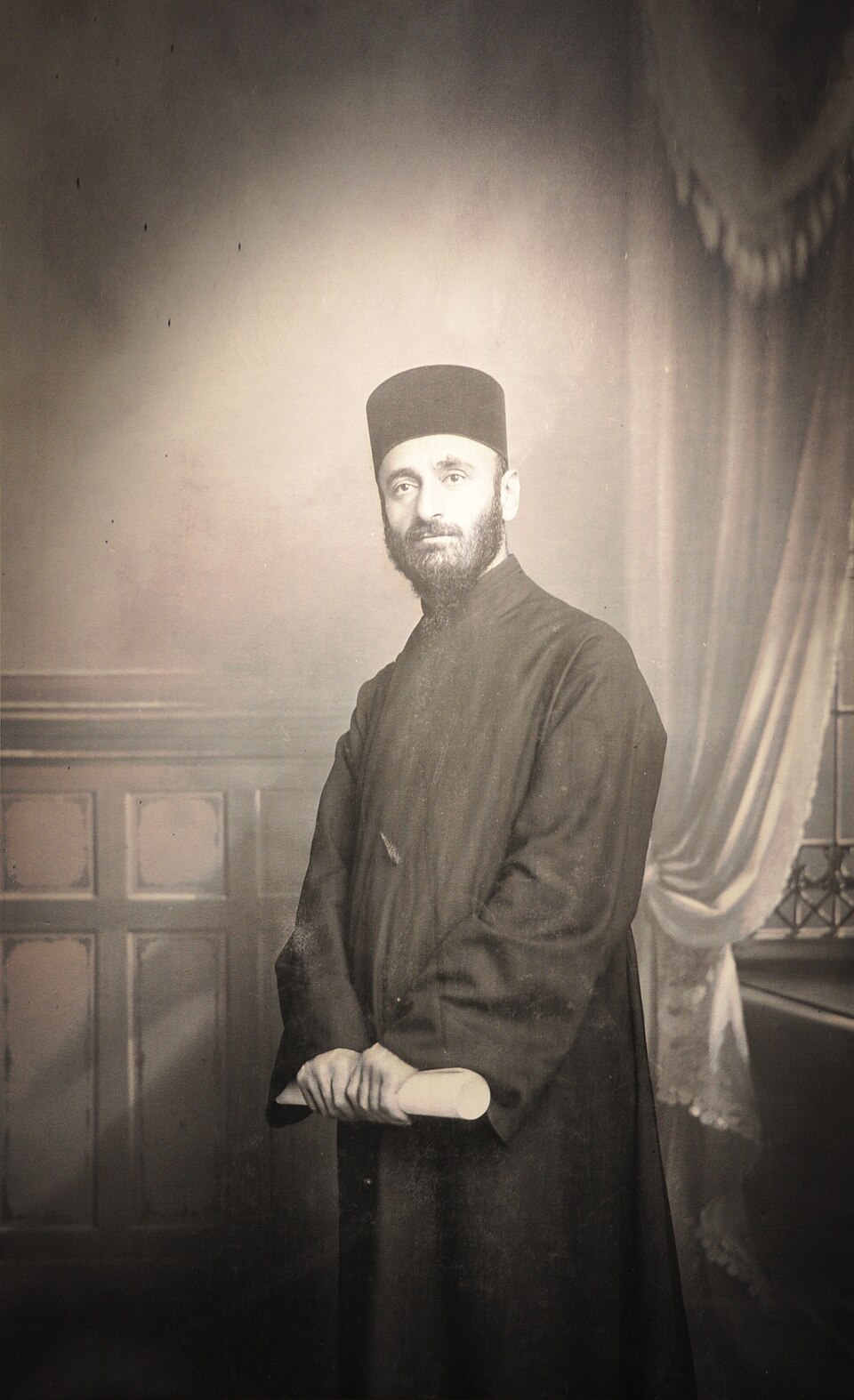
Today, Komitas is often described as a great Armenian composer.
That is true.
But it is not enough.
He was a composer, singer, conductor, clergyman, teacher, scholar of medieval music, and one of the early representatives of the field now known as ethnomusicology.
One of the most important things he did for Armenian culture may not have been composing new music at all.
He heard the old music.
And he managed to write it down.
Komitas was born Soghomon Soghomonian in 1869 in Kütahya, also known among Armenians as Kutin, in the Ottoman Empire. His family was Armenian, although the cultural environment of the city was largely Turkish-speaking. His ancestors had moved there from the historic Armenian region of Goghtn in the 17th century.
Music was present in the family long before Soghomon became a professional musician. His father, Gevorg, and his mother, Taguhi, both had good voices and composed songs, some of which entered the local musical tradition.
Soghomon’s childhood was difficult. His mother died when he was about one year old. In 1880, he also lost his father. The orphaned boy was first cared for by his grandmother and later by an aunt.
But it was his voice that changed his life.
In 1881, the Armenian clergyman Gevorg Derdzakian was traveling from Kütahya to Etchmiadzin. At the request of Catholicos Gevorg IV, he was to bring with him an orphaned boy with a gifted voice to study at the Gevorgian Theological Seminary.
About twenty boys were considered.
Soghomon was chosen.
And so, at the age of twelve, an orphan from Kütahya arrived in Etchmiadzin — the place that would shape the rest of his life.
There he received a systematic Armenian education and studied theology, literature, history, and music. During his seminary years, the interest that would later become his life’s work began to take shape: Soghomon started collecting and notating folk songs.
This is an important detail.
He did not begin collecting music only after becoming a famous scholar and composer.
He began while he was still a young seminarian.
In 1894, Soghomon was ordained and received the name Komitas, in honor of the 7th-century Armenian Catholicos and hymnographer Komitas Aghdzetsi. The following year, he received the rank of vardapet. From that point on, the name Komitas Vardapet gradually replaced Soghomon Soghomonian, and it was under that name that he entered history.
But church education alone was not enough for the work he wanted to do.
Komitas wanted to understand music professionally and scientifically.
In 1895–1896, he studied music theory in Tiflis with the composer Makar Yekmalian. Then, with financial support from Alexander Mantashev, he was able to travel to Berlin.
For an Armenian clergyman at the end of the 19th century, that move was enormously significant.
At the time, Berlin was one of Europe’s major centers of scholarship and musical education. From 1896 to 1899, Komitas studied at Richard Schmidt’s private conservatory and at Friedrich Wilhelm University, today Humboldt University of Berlin. His teachers included prominent musicologists such as Oskar Fleischer, Heinrich Bellermann, and Max Friedländer.
He studied European music theory, harmony, composition, and methods of scholarly research.
But something important happened.
European education did not push him away from Armenian tradition and toward European music alone.
The opposite happened.
It gave him the tools to study Armenian music far more deeply.
Komitas was interested in a question that sounds simple at first: what makes Armenian music Armenian?
For centuries, Armenians, Kurds, Turks, Persians, Arabs, Assyrians, and other peoples had lived alongside one another in the region. Their musical cultures interacted. Melodies traveled with people. Instruments and performance practices influenced one another.
Komitas did not ignore this reality.
He recorded and studied not only Armenian music but also examples from neighboring peoples. He compared their structure, rhythm, and melodic language in an effort to identify the distinctive characteristics of each tradition.
That is why his work was far more than patriotic song collecting.
He was trying to study music scientifically.
In 1899, Komitas became one of the members of the newly established International Musical Society. Before European specialists, he delivered lectures on Armenian folk and church music.
For the first time, Armenian musical tradition was being presented systematically in a European academic setting not as an exotic branch of “Oriental music,” but as an independent field of study.
After returning to Etchmiadzin, Komitas began an almost unbelievable amount of work.
He taught at the Gevorgian Seminary, directed a choir, gave concerts, wrote articles, studied manuscripts, researched church music, and continued traveling through villages in search of songs.
Today, a melody can be recorded on a phone in seconds.
Komitas did not have that option.
Most of the material had to be written down by ear.
He listened to the performer and notated the music. He had to catch the rhythm, pitch, melodic changes, local performance style, and the relationship between the music and the words.
And folk songs often did not exist in a single “official” version.
The same song might be sung differently in a neighboring village.
Another performer might alter the melody.
The same words might be paired with a different musical line.
A researcher had to do more than find a beautiful song. He had to understand what exactly he was hearing.
Komitas was interested in everything: wedding songs, lullabies, love songs, work songs, shepherd songs, dance tunes, ritual songs, and sacred melodies.
Work songs were especially important.
In traditional rural culture, music did not always exist separately from life. People could sing while plowing, harvesting, or performing other collective labor. The rhythm of the song was connected to the movement of the body and the rhythm of the work.
If you simply write down the notes without seeing how the song is performed, part of its meaning disappears.
Komitas understood that.
That is why he was interested not only in the sound, but also in the environment in which the sound was born.
The literature usually speaks of around three thousand songs and melodies collected by him. The exact number depends on how separate versions and notations are counted, and a significant part of his collection was later lost. Only part of the enormous body of material he managed to record has survived.
But even what remains was enough to transform Armenian music.
There is another important point to understand.
Komitas did not simply write songs down and place the pages in an archive.
He began working with this material as a composer.
Many works that today are thought of as “Komitas’s music” are based on folk melodies. He did not necessarily invent the melody from scratch. His art lay elsewhere: in hearing the structure of a folk song, preserving its character, and creating a professional arrangement in which the melody did not dissolve into a foreign musical system.
His work with choirs became especially important.
A traditional song might be monophonic, but Komitas created polyphonic arrangements in a way that allowed the harmony to support rather than overwhelm the original melody.
This is where the researcher became the composer.
He did not treat folklore as raw material that needed to be “improved” with European harmony.
He tried to create professional music from within the internal logic of the Armenian melody itself.
That is one of the reasons he is regarded as the founder of the Armenian national school of composition.
After Komitas, an Armenian composer no longer had to choose between two extremes: simply copying a folk song or writing European-style music with a few “national” decorations.
It became possible to build a professional musical language on the foundation of one’s own tradition.
“Krunk,” “Antuni,” “Tsirani Tsar,” “Kele-Kele,” “Shoger Jan,” “Kakavi Yerg,” and many other works entered Armenian cultural memory in large part through Komitas’s arrangements and interpretations.
But folklore was only one side of his work.
The other was Armenian sacred music.
Komitas studied ancient hymns and manuscripts, compared different traditions of church singing, and tried to reconstruct features of the historical Armenian musical system.
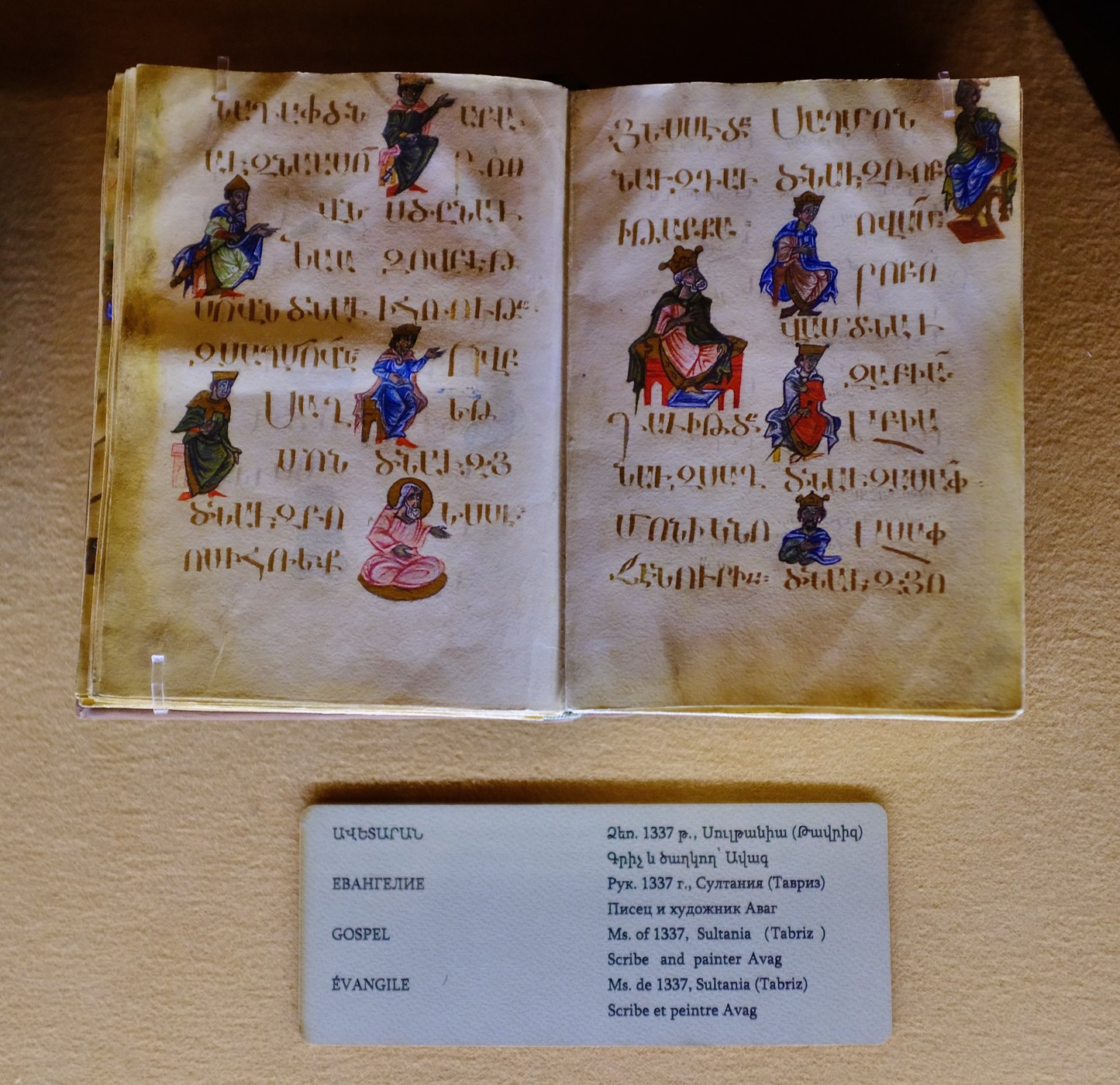
A special place in this work belonged to the khazes — medieval signs of musical notation.
In old Armenian manuscripts, special symbols can be seen above the text. At one time, performers understood their meaning and knew how they guided the melody. Over the centuries, however, practical knowledge of this system was largely lost.
Komitas devoted years to the study of khazes.
He believed that he had identified important principles of their structure and had come closer to understanding the system. But he did not live to fully reconstruct the meaning of all the signs. Research into Armenian medieval notation continues to this day.
This also shows the range of his interests.
The same person could spend the morning writing down a song from a villager and then turn to the musical signs of a thousand-year-old manuscript.
For him, these were not two separate worlds.
Folk song and church chant were different layers of the same musical culture.
Komitas was not only a scholar with a notebook and music paper.
He had an exceptional voice.
Contemporaries repeatedly described the powerful impression of his performances. He sang, conducted choirs, and gave public lectures, combining explanations of Armenian music with live performance.
And here, an extraordinary link survives between us and a man born in 1869.
We can still hear his voice.
Recordings of Komitas singing were made in Paris in 1912 and have survived to the present day.
This is no longer a photograph or a memory written by someone who knew him.
His actual voice has reached us from the beginning of the 20th century.
In 1907, Komitas published his first collection in Paris, Hay Knar — “The Armenian Lyre” — which included arrangements of Armenian peasant songs for solo and choral performance.
His concerts and lectures took place in different cities across Europe and the Caucasus. Audiences encountered music that many of them had never before heard in professional concert form.
In 1910, Komitas made another important decision.
He moved to Constantinople.
The city had a large and active Armenian community and offered opportunities that were limited in Etchmiadzin. There, Komitas founded the mixed choir Gusan, which had around 300 members.
The scale of such an ensemble is worth imagining.
Three hundred men and women had to learn not simply to sing together, but to perform a new polyphonic Armenian repertoire with precision.
Komitas gave concerts, worked with students, and planned larger educational projects. He wanted to establish a music school, effectively laying the foundations for a professional system of national musical education.
At the beginning of World War I, he was forty-five years old.
This was not a man at the end of his career.
On the contrary, Komitas had reached the point where decades of collecting material, research, and European education could have produced many more results.
But 1915 divided his life in two.
During the arrests of Armenian intellectuals in Constantinople on the night of April 24, 1915, Komitas was among those detained by the Ottoman authorities. Along with Armenian writers, doctors, journalists, public figures, and cultural leaders, he was deported from the city.
Unlike many of those arrested, Komitas survived and, through the intervention of influential individuals, was returned to Constantinople.
But his earlier creative life effectively came to an end.
In the following years, he received treatment first in Constantinople and, from 1919 onward, in France. He spent the final years of his life in French medical institutions.
It is especially important not to reduce his fate to the simplistic legend of “the composer who went mad because of what he saw.”
Komitas’s actual medical history is far more complex than such formulas suggest and remains a subject of separate study. What is well documented is something else: after 1915, the intense scholarly, performing, and compositional activity that had defined his life largely ceased.
The man who had spent decades searching for songs and writing them down fell silent.
Komitas died in France in 1935.
The following year, his remains were transferred to Yerevan and buried in the pantheon of Armenian cultural figures that now bears his name.
But if we try to measure the importance of Komitas by the number of monuments, streets, or institutions named after him, we get only a superficial picture.
His greatest legacy can be heard.
Imagine an Armenian wedding in the 19th century in a village that no longer exists.
Imagine a man singing while working in a field.
A lullaby that the mother singing it had never seen in print.
A dance melody that existed only because one musician had learned it from another.
Oral culture is at once incredibly alive and incredibly fragile.
As long as it is performed, it exists.
When the chain of memory breaks, it may be impossible to reconstruct.
Komitas lived at a historical moment when centuries-old rural culture was still alive, but the world around it was already changing rapidly.
He managed to enter that world before its enormous transformation.
He managed to hear it.
He managed to write it down.
And then he took one more step: he showed that folk music was not primitive material that needed to be replaced by “real” professional music.
It already had a complex system.
Its own logic.
Its own rhythm.
Its own relationship between word and melody.
Its own aesthetic.
That is why Komitas was more than a collector of songs.
He was trying to create a scholarly language through which Armenian music could explain itself.
His work existed in several worlds at once.
He was an Armenian clergyman and a Berlin-trained musicologist.
He studied medieval manuscripts and listened to villagers in Armenian settlements.
He performed church music and collected dance melodies.
He studied Armenian folklore and compared it with the music of neighboring peoples.
He worked as a scholar and turned the results of his research into art.
That combination is what made him unique.
Sometimes a person’s legacy is something they built.
A fortress.
A church.
A painting.
A book.
In Komitas’s case, the legacy also included sounds that had existed long before he was born.
He did not invent them.
He made it possible for them to outlive the people who sang them.
That is why Komitas can be called the man who collected the voice of Armenia.
Not as a poetic metaphor.
Almost literally.