In 1214, Arzu Khatun explained on the wall of Dadivank why she had built a church: she was fulfilling the intention of her deceased sons. A year later, Tigran Honents left a detailed list at Ani of the property assigned to his monastery. At Noravank, an inscription preserved the architect Siranes’s name and a grant of land to him. These documents reveal three different acts: keeping a promise, providing for an undertaking’s future, and recognising a craftsman’s work.
Behind the names and dates are decisions made by particular people. Reading each inscription alongside the building on which it survives brings into view the patron’s purpose, relationships among the living and concern for the dead. We begin with three closely documented stories, then turn to a short inscription at Tatev that reminds us why even a persuasive reading requires caution.
Dadivank: fulfilling a promise
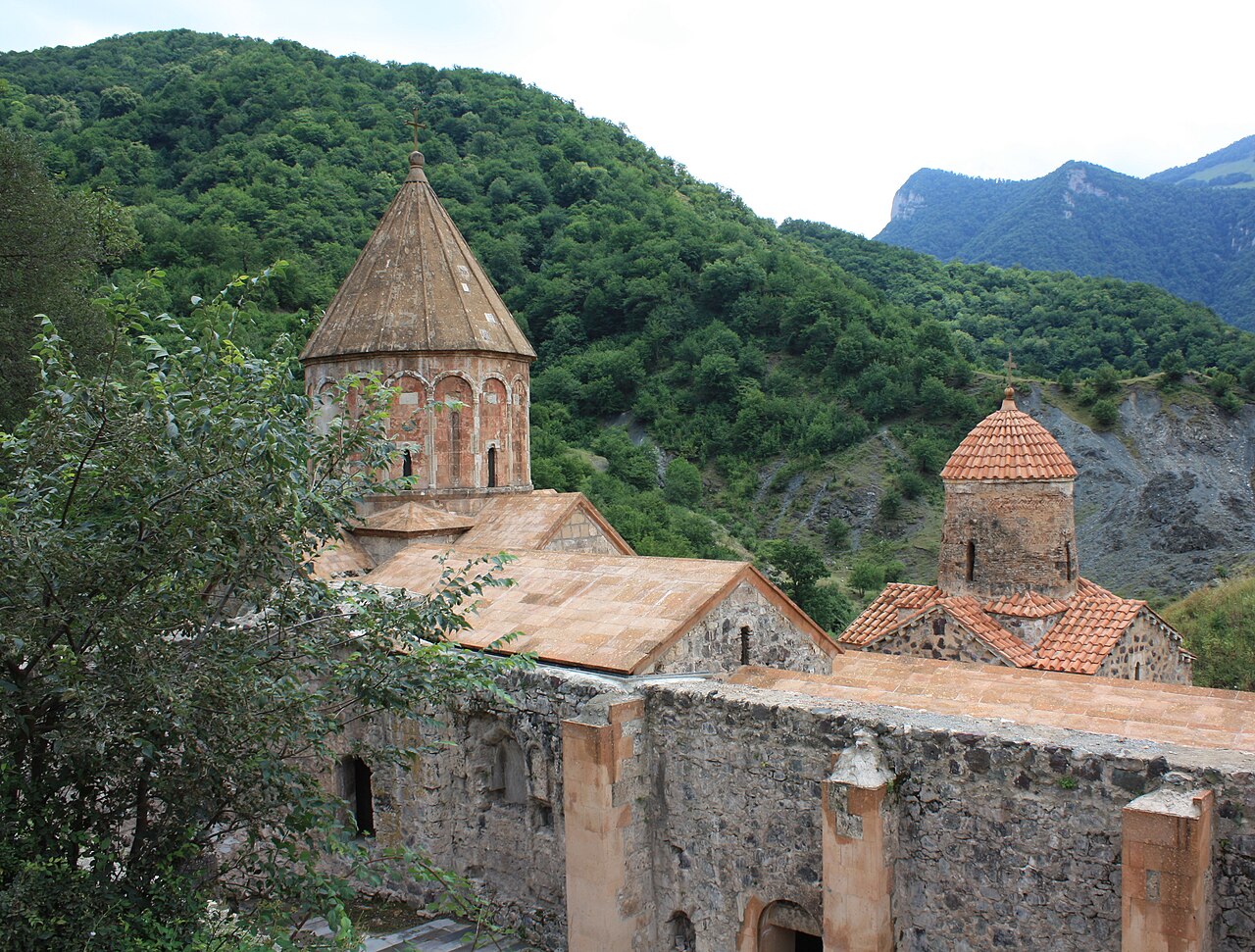
A lengthy foundation inscription by Arzu Khatun survives on the southern façade of Dadivank’s main church. It dates the building to 1214 and connects its creation with bereavement. Arzu Khatun, wife of Vakhtang, lord of Haterk, recounts the deaths of her sons: the elder, Hasan, killed in war, and the younger, Grigor, who died three months later. In the published translation, she explains that her sons had intended to build a church here but died before they could do so. It fell to her to fulfil their wishes.
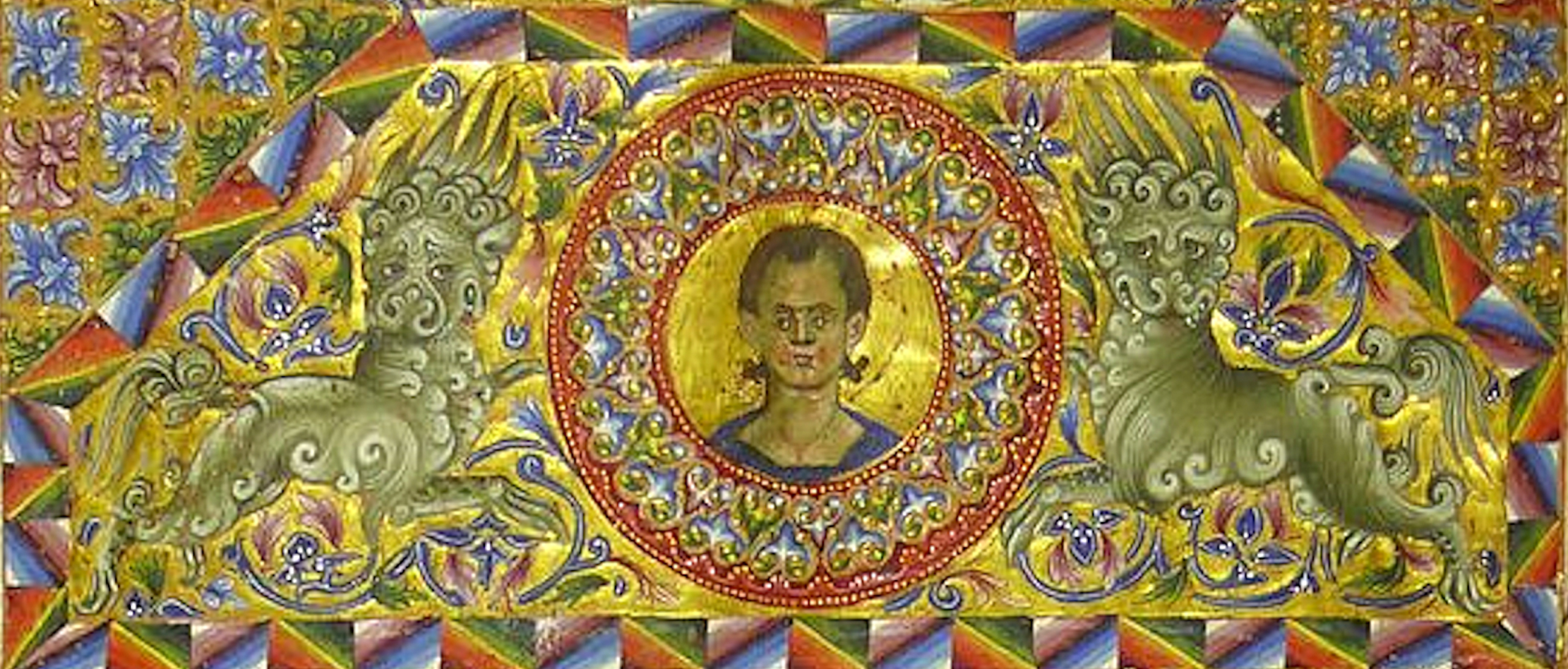
The arrangement of the façade reinforces this account. Figures of the sons stand above the inscription on either side of the window, with a model of the church higher up. Architecture, image and text form a connected statement. The request to remember the founder in prayer addresses those who would worship and serve in the church after her. A modern reader encounters a remarkably personal voice, expressed through formal religious language.
We should be careful not to give Arzu Khatun feelings or experiences she did not record. We do not know how she spent the days after her loss, or what conversations accompanied the building work. We do know which memory she chose to make public. The inscription presents a woman as the patron of a substantial building and as the person defining its purpose. Family grief takes a form intended to endure within the life of a community.
Ani: the substance of a gift
The inscription on the church of Saint Gregory the Illuminator built by Tigran Honents at Ani in 1215 reveals another aspect of church life. The founder lists property and revenues assigned to the monastery. His endowment includes rural estates, hostelries, shops, baths, gardens and rights to income from mills. Each entry represents a way to support the monastery beyond the completion of its buildings.
The list invites us to look beyond the church enclosure. A shop implies trade; a mill connects the monastery to grain and the labour of millers; a garden needs tending. The properties named in the text link the sanctuary to the city and its countryside. Historians can read the inscription as evidence for Ani’s economy, preserving information about places that have vanished or can no longer be identified on the ground.
The endowment also tells us something about the donor. Tigran Honents sought to give his undertaking a lasting future through property, a religious community and a record on the wall. The scholar Ioanna Rapti draws attention to his presence at several monuments in Ani and its surroundings: the patron’s name became part of the city’s memory. His church is still known by his name, although its dedication is to Gregory the Illuminator.
It is useful to keep two perspectives in view when reading this document. It records generosity and religious purpose, and it also records wealth concentrated in a single person’s hands. The people who worked on the listed properties scarcely acquire voices of their own in this account. The inscription tells us much about the donor’s world, while leaving questions about the lives of those whose labour sustained his revenues.
Noravank: a craftsman beside a prince
At Noravank, the funerary church of Saint Gregory, completed in 1275, is associated with Prince Tarsayich Orbelian’s commission in memory of his brother Smbat and with the architect Siranes. An inscription on its northern wall names the master and records a grant of land to him. Here a particular name and a material reward offer an unusual glimpse of the relationship between patron and practitioner.
The record helps us understand statements about building more precisely. When a founder says that he built a church, he does not necessarily mean that he personally designed it or dressed its stones. The patron supplied resources and made decisions; the master carried responsibility for another part of the work. Naming Siranes helps distinguish those roles, preserving professional skill within the history of a princely commission.
Even a surviving name cannot restore the whole building site to view. Who quarried and transported the stone? How many people laid the masonry? How were responsibilities divided? This inscription does not give a complete answer. We should value its precision while recognising the limits of its testimony: the survival of one architect’s name does not make a collective undertaking the work of a single person.
Tatev: reading as an ongoing inquiry
At Tatev, Arsen Harutyunyan studied a mirror-written inscription of 1537 on the south wall of the Cathedral of Saints Peter and Paul. It contains the names Ter Anton, Ter Stepanos and Father Kirakos. He suggests that they were visiting donors. That remains an interpretation: the names deciphered and the explanation for their presence carry different degrees of certainty.
This small example matters whenever we discuss an old text. Deciphering letters, translating words and interpreting historical circumstances are separate stages. Confidence in one does not establish the others. Even a persuasive account should retain the qualifications made by its researcher.
Listening to an inscription
A few straightforward questions are worth asking at a church wall. Who speaks in the text, and on whose behalf? What exactly did that person do: build, restore, donate, or request remembrance? Where is the inscription placed, and which images accompany it? These questions reveal a document with a particular purpose, preserved within an architectural setting.
It is equally important to distinguish a literal translation from a retelling. This article paraphrases the inscriptions from published research; it does not present the historical figures’ words as direct quotations. A damaged passage, a disputed reading or a suggestion about a donor should never be quietly completed with an attractive detail. Sometimes a gap honestly left open tells us more about our engagement with the past than a confident reconstruction.
Armenian church inscriptions preserve different scales of human experience. At Dadivank, a mother resolves to fulfil her sons’ promise. At Ani, an extensive endowment provides for a monastery’s future. At Noravank, a named practitioner becomes visible within a princely commission. At Tatev, surviving names still require cautious interpretation. Reading these lines closely brings us into contact with people who considered their actions important enough to entrust them to stone.